Hellenic Navy launches second multipurpose FDI frigate, confirms talks on fourth
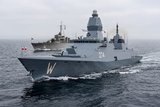
Frigate class leader Kimon in September 2024, when the second vessel in the fleet was launched. (Photo: Hellenic Republic Ministry of National Defence)
The HS Nearchos will join its sister ship HS Kimon in a variety of roles once it has been fully equipped and passed its sea trials. The delivery timeline for the fourth frigate remains unclear due to its late confirmation.


The second of three contracted defence and intervention frigates built by Naval Group for the Hellenic Navy has been launched at the company’s shipyard in Lorient.
The HS Nearchos launched on September 19, 2024, and will be outfitted with its Panoramic Sensors and Intelligence Module (PSIM) a few weeks after launch. The first of the frigates, HS Kimon is currently undergoing sea trials, while the third, HS Formion completed its hull assembly in August. The plan is for all three frigates to be in service before the end of 2026.
The Nearchos and its sister ships each weigh 4,500 tons
Our news & analysis is now part of Defence Insight®
A Basic-level or higher Defence Insight subscription is now required to view this content.



More from Naval Warfare
-
![All eyes on Royal Navy’s Type 93 market engagement as industry prepares bids]()
All eyes on Royal Navy’s Type 93 market engagement as industry prepares bids
Responses are due by 29 October as the Royal Navy tests the market, with BAE Systems’ Herne and MSubs’ Excalibur setting up a contest where payloads may decide the winner.
-
![From Poland to the Pacific: can Miecznik become a blueprint for other navies?]()
From Poland to the Pacific: can Miecznik become a blueprint for other navies?
Babcock is taking its Polish industrial partnership approach to Denmark and New Zealand as navies seek sovereign shipbuilding skills alongside ships.
-
![Unsettled waters in the North: can navies still trust their Arctic acoustic maps?]()
Unsettled waters in the North: can navies still trust their Arctic acoustic maps?
The changing Arctic environment is creating new challenges for submarine detection, driving demand for distributed sensors, uncrewed underwater vehicles and real-time acoustic modelling.