Greece seeks engine support for HS Toxotis
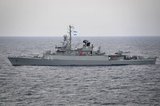
HS Toxotis is a fast patrol boat in service with the Hellenic Navy. (Photo: Hellenic Navy)
The Hellenic Navy requires a contractor to maintain and sustain the two engines powering an ex-Norwegian patrol boat.


The Hellenic Navy has opened a tender for maintenance and sustainment of the two MTU 12V-331 engines that power the fast patrol boat HS Toxotis.
A two-year contract will be worth almost €217,000 ($246,600). Responses are due by 14 March.
Toxotis was originally built in the 1960s for the Royal Norwegian Navy as a Tjeld-class boat. It was sold to the Hellenic Navy in 1981.
The 24.5m-long boat displaces 72t, has a top speed of 21.5kt and is armed with one Bofors L70 40mm and a single Oerlikon 20mm cannon.

More from Naval Warfare
-
![Argentina’s submarine and frigate acquisitions resurface with $3.5bn funding plan]()
Argentina’s submarine and frigate acquisitions resurface with $3.5bn funding plan
Buenos Aires set out foreign loans worth $3.5 billion in its draft 2027 budget, opening a contest in which Naval Group and TKMS could lead the field.
-
![Denmark’s air defence frigate requirement draws growing European competition]()
Denmark’s air defence frigate requirement draws growing European competition
With no formal competition under way, industrial partnerships, production capacity and air defence capability could all shape the programme as Denmark considers how to replace its three Iver Huitfeldt-class frigates.
-
![Five years on: where could opportunities emerge next for AUKUS Pillar II?]()
Five years on: where could opportunities emerge next for AUKUS Pillar II?
Payload commonality, combat systems and electronic warfare are emerging as likely priorities as the trilateral partnership balances building submarines with sharing industrial ecosystems.
-
![Singapore expands maritime presence with future-ready Sentinel OPV]()
Singapore expands maritime presence with future-ready Sentinel OPV
Singapore is building space for uncrewed systems and future technologies into its new Sentinel-class OPVs, reflecting a wider move towards adaptable vessels capable of maintaining persistent maritime presence.