


UK’s $1 billion AUKUS support request signals strong ongoing US collaboration
The latest foreign military sales request from the UK has implications for the future of the programme and collaboration between the three nations.


GE’s Marine Solutions has been selected by BAE Systems to provide a number of marine electrical solutions to support the upgrade of power generation systems on Royal Navy Type 45 destroyers, the company announced on 11 June.
The contract is a part of the UK Ministry of Defence’s Power Improvement Project (PIP). Under PIP, BAE Systems and its partners will replace the existing two diesel generators with larger units, fitting an additional larger diesel generator and modifying the high-voltage system on each ship.
GE’s Marine Solutions has been contracted to update the electrical power management system on each destroyer to integrate the new generator sets and their power requirement by supplying hardware, including a new high-voltage switchboard, diesel generator neutral earth resistor, battery charger, automatic voltage regulator cubicle and additional automation outstations.
In addition, GE will be responsible for power system modelling, updating the power and propulsion automation system, the integration and commissioning of the high-voltage electrical system and the provision of integrated logistic support data.
The improvements executed by GE will enable the ships to meet new power system requirements, such as the ability to generate and effectively utilise more electrical power, serving the ship’s operational requirements and the increasing power demands on board. Because of the limited space on the existing vessels, GE’s electrical solutions will integrate the new system with a minimised footprint and impact on existing systems.


The latest foreign military sales request from the UK has implications for the future of the programme and collaboration between the three nations.

The USCG plans to award a contract this year for the construction of Homeland Security Cutters. The new vessels will replace the 60-plus-year-old fleet of Light Icebreaking Tugs.

The expansion of the Redstone facility in Alabama will enable Raytheon to increase production of Standard Missiles in the location by 50% and support Washington in refilling stockpiles after recent operations have depleted the Pentagon’s reserves.
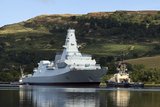
Major naval initiatives including the European Patrol Corvette programmes and Norway’s UK partnership-focused purchase of Type 26 frigates point to the growing interest in the advantages of commonality across allied navies.
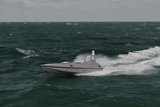
The UK Royal Navy’s rapid procurement of uncrewed platforms aligns with the force’s strategic shift towards a fleet better equipped to handle modern threats.
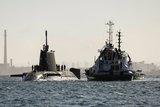
The Astute-class submarine’s visit to Australia was the first time maintenance activity on a UK Royal Navy nuclear submarine had been carried out in the country.

Connect with us on socials


