From the Baltic to the Gulf: where USV procurement is heading next
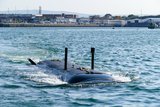
Saildrone’s Voyager USV completed a six-month deployment in the Baltic Sea for Denmark. (Photo: Saildrone)
Saildrone’s new Copenhagen base is one sign of a larger shift, as navies globally turn to uncrewed vessels for surveillance and mine clearance.


The opening of Saildrone’s European headquarters in Copenhagen, Denmark on 17 August 2026 was presented as a company milestone. Set against the procurement signals emerging globally, it reads as wider evidence that navies are beginning to adopt uncrewed surface vessels (USVs) as working parts of the fleet.
Saildrone, a US developer of USVs, said its Danish base would support new construction projects at Van der Valk Shipyard in the Netherlands, Umoe Mandal in Norway and Southern Spars in Poland. The company, which announced a European subsidiary in April 2025 backed by a US$60 million funding round led by the Export and
Our news & analysis is now part of Defence Insight®
A Basic-level or higher Defence Insight subscription is now required to view this content.



More from Naval Warfare
-
![Israeli Navy looks to expand as war reshapes future force requirements]()
Israeli Navy looks to expand as war reshapes future force requirements
Israel’s navy is preparing for a larger and more technically diverse role, but its ambitions could be impacted by supply chain restrictions, accelerating demand for domestic naval production as well as autonomous maritime capabilities.
-
![Competitive P17B tender marks a shift in Indian Navy frigate procurement]()
Competitive P17B tender marks a shift in Indian Navy frigate procurement
The Indian Navy's P17B programme is expected to combine greater weapons capacity with a competitive domestic construction model, although key systems could remain dependent on international supply chains.
-
![How France’s SNLE 3G programme is reshaping the naval nuclear industrial base]()
How France’s SNLE 3G programme is reshaping the naval nuclear industrial base
Extending far beyond a four-submarine replacement programme, France’s ballistic missile submarine effort is a decades-long industrial initiative designed to preserve the country’s ability to build and sustain nuclear-powered strategic platforms.
-
![China’s mineral processing dominance exposes naval supply chain vulnerabilities]()
China’s mineral processing dominance exposes naval supply chain vulnerabilities
Competition for critical minerals, and China’s dominance of their processing, is emerging as a decisive factor in future naval procurement programmes.