French-UK mine countermeasure contract awarded


Thales and BAE Systems, along with partners ECA Group, ASV, Wood & Douglas and SAAB, have won the French-UK Maritime Mine Counter Measures (MMCM) contract, as announced on 27 March.
The MMCM programme was developed under the cooperation agreement between France and the UK in 2012, and it aims to develop a prototype autonomous, remotely-operated system for detection and neutralisation of sea mines and underwater improvised explosive devices.
The programme is split into three stages, with the first phase for design and the next phases covering the manufacturing and testing of France’s SLAM-F and UK’s MHC mine countermeasures capabilities. The next stages are subject to contract options.
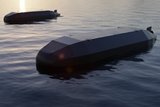
Thales will provide systems to the Royal Navy and French Navy for two years of evaluation testing. Its systems will include an unmanned surface vehicle with an autonomous navigation system, an obstacle detection and avoidance sonar, a threat identification and neutralisation capability based on Remotely Operated Vehicles (ROVs), a towed synthetic aperture sonar and Autonomous Underwater Vehicles (AUVs).
The AUVs will use new-generation SAMDIS synthetic aperture sonar and perform their tasks autonomously with control from a host ship or shore-based station via high-data-rate communication links. An integrated team comprising of personnel from Thales in France and the UK as well as BAE Systems will deliver the project.
Thales will deliver the integrated portable operations centre solution, which will incorporate command & control by Thales and BAE Systems. BAE Systems will provide the mission management system, managing the command and information systems, as well as the ROVs, the virtual visualisation and experimentation suite.


More from Naval Warfare
-
![RTX confirms US Marine Corps and US Navy acquire Hadalus UUV]()
RTX confirms US Marine Corps and US Navy acquire Hadalus UUV
RTX told Shephard that the Hadalus UUV has been procured by the US Marine Corps and the Office of Naval Research for operational experimentation as the company prepares additional demonstrations with the US Navy, NATO and AUKUS partners.
-
![Europe’s naval contractors benefit from growing refit and upgrade demand]()
Europe’s naval contractors benefit from growing refit and upgrade demand
Rheinmetall’s order to modernise the German Navy frigate Bayern points to a wider European shift towards extending warship service life as new-build programmes face delay.
-
![The UK joins the movement towards joint procurement]()
The UK joins the movement towards joint procurement
The UK will spend an estimated US$3.89 billion over the next decade in joint naval programmes, a lot of which will be in cooperation with Norway.
-
![Rheinmetall’s GMF 140: Ambitious frigate or market misfit?]()
Rheinmetall’s GMF 140: Ambitious frigate or market misfit?
Rheinmetall has unveiled its first next-generation frigate design, showing ambitions to compete as a surface combatant prime contractor. While the company is targeting North America, analysts believe the concept may be better positioned for future European programmes.
-
![US Navy $76.6bn award provides stability for submarine production]()
US Navy $76.6bn award provides stability for submarine production
The US Department of War’s US$76.6 billion Columbia-and Virginia-class submarine contract gives industry demand certainty as Washington seeks to rebuild its shipbuilding base.
-
![Dreadnought Phase 4 opens £2.5 billion supply chain opportunity]()
Dreadnought Phase 4 opens £2.5 billion supply chain opportunity
The UK government’s £8.4 billion Dreadnought Phase 4 investment sets aside £2.5 billion for the wider submarine supply chain, opening new work beyond BAE Systems’ prime contract.