Fleet support vessels are approved for the Indian Navy
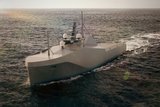
India had earlier negotiated with TAIS over fleet support vessels, but in the end it decided to go with an indigenous design. (Image: TAIS Shipyards)
India is set to proceed with the construction of five indigenously built replenishment vessels.


India’s government has approved the indigenous construction of five fleet support vessels (FSV) for an estimated INR200 billion ($2.41 billion) for the Indian Navy (IN).
Industry officials said the Cabinet Committee on Security nominated state-owned Hindustan Shipyard Limited (HSL) on 16 August to build the 45,000t FSVs.
They said the MoD is expected to sign a formal contract with HSL imminently, and the first FSV would be delivered to the IN within four years, followed by one vessel annually until all transfers are completed by 2031/32.
The IN has so far operated without FSVs, and the induction of five platforms
Our news & analysis is now part of Defence Insight®
A Basic-level or higher Defence Insight subscription is now required to view this content.




More from Naval Warfare
-
![Chinese maritime militia puts naval surveillance to the test]()
Chinese maritime militia puts naval surveillance to the test
With record deployments in the South China Sea and a newly reported sighting east of Taiwan, China’s maritime militia is putting greater pressure on regional surveillance. How can navies establish what these vessels are doing quickly and reliably enough to respond?
-
![Kongsberg Maritime and Thales UK team on Arctic Hunter Type 92 proposal]()
Kongsberg Maritime and Thales UK team on Arctic Hunter Type 92 proposal
The Norwegian company says a commercial hull, proven sonar and a British yard could deliver uncrewed submarine hunters by the end of the decade, but the Royal Navy has not yet set a requirement or timeline.
-
![US Navy weighs “Super Intelligence” role in designing a quieter SSN(X) attack submarine]()
US Navy weighs “Super Intelligence” role in designing a quieter SSN(X) attack submarine
NAVSEA is exploring AI-assisted design for a larger, stealthier submarine with increased weapons capacity and uncrewed-system integration, with lead-boat procurement envisaged from 2040.
-
![Navies need cheaper ways to defeat drones, but can they sustain merchant protection?]()
Navies need cheaper ways to defeat drones, but can they sustain merchant protection?
New interceptors and launchers could help navies preserve missile stocks during prolonged escort operations. Yet lower engagement costs will only improve merchant protection if the weapons are available where ships need defending.