Fincantieri joins roster of major companies working to protect undersea cables
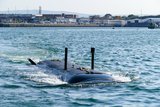
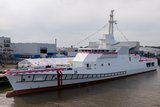
Undersea infrastructure has become vulnerable national infrastructure. (Image: Thales)
The group’s collaboration with network provider Sparkle is the latest move to improve the robustness of submarine cable networks.


Shipbuilding group Fincantieri has signed a Memorandum of Understanding (MoU) with Sparkle, an Italian service provider, to collaborate on the development of technological solutions to protect critical undersea infrastructure and submarine telecommunications cables.
The agreement is part of a strategic vision for Italy’s technological development to ensure the resilience of undersea infrastructure, which is fundamental for reliable digital connectivity.
Fincantieri and Sparkle have agreed to work in specialised teams to analyse the requirements for improving the security of undersea telecommunications infrastructures. Then they will identify innovative technologies and solutions to ensure their operational resilience.
Fincantieri and Sparkle are not the
Our news & analysis is now part of Defence Insight®
A Basic-level or higher Defence Insight subscription is now required to view this content.


More from Naval Warfare
-
![From the Baltic to the Gulf: where USV procurement is heading next]()
From the Baltic to the Gulf: where USV procurement is heading next
Saildrone’s new Copenhagen base is one sign of a larger shift, as navies globally turn to uncrewed vessels for surveillance and mine clearance.
-
![Israeli Navy looks to expand as war reshapes future force requirements]()
Israeli Navy looks to expand as war reshapes future force requirements
Israel’s navy is preparing for a larger and more technically diverse role, but its ambitions could be impacted by supply chain restrictions, accelerating demand for domestic naval production as well as autonomous maritime capabilities.
-
![Quantum sensing gathers pace as navies eye undersea advantage]()
Quantum sensing gathers pace as navies eye undersea advantage
As AI dominates defence conversations, industry increasingly points to quantum sensing as the technology set to change submarine and uncrewed underwater vehicle operations.