Europe’s naval contractors benefit from growing refit and upgrade demand
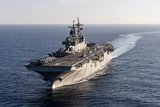
Rheinmetall has secured a contract to modernise the German Navy’s F123-class frigate Bayern. (Photo: Defense Visual Information Distribution Service)
Rheinmetall’s order to modernise the German Navy frigate Bayern points to a wider European shift towards extending warship service life as new-build programmes face delay.


Rheinmetall’s order to overhaul the German Navy frigate Bayern in practice captures a trend under way across European navies: whilst waiting for new ships to arrive, navies increasingly need to keep older platforms operational for longer.
At the end of Q2 2026, Rheinmetall was awarded a contract worth in the region of several hundred million euros to modernise the 143m-long Bayern, a Class 123 frigate commissioned in 1996.
Under the deal, the vessel is due to remain operational until at least 2035, with its capability profile adapted to current requirements. A spokesperson for the Federal Office of Bundeswehr Equipment, Information
Our news & analysis is now part of Defence Insight®
A Basic-level or higher Defence Insight subscription is now required to view this content.




More from Naval Warfare
-
![How France’s SNLE 3G programme is reshaping the naval nuclear industrial base]()
How France’s SNLE 3G programme is reshaping the naval nuclear industrial base
Extending far beyond a four-submarine replacement programme, France’s ballistic missile submarine effort is a decades-long industrial effort designed to preserve the country’s ability to build and sustain nuclear-powered strategic platforms.
-
![Suppliers await next step in Australia’s mine warfare transition]()
Suppliers await next step in Australia’s mine warfare transition
Australia’s mine countermeasure capability remains in flux as the Huon-class nears retirement, but accelerated investment in autonomous systems is opening a path for industry.
-
![Can the US Navy ask Indo-Pacific allies to do more while training with them less?]()
Can the US Navy ask Indo-Pacific allies to do more while training with them less?
As the Iran War draws US ships and marine corps units away from the Indo-Pacific, curtailed exercises and a temporary carrier gap are exposing tensions between Washington’s demand for more self-reliant allies and the joint training needed to realise that ambition.
-
![How could Rheinmetall’s GMF 140 fit with ongoing programmes in North America?]()
How could Rheinmetall’s GMF 140 fit with ongoing programmes in North America?
With Canada committed to its River-class replacement and the USN pursuing a lower-cost frigate, Rheinmetall will need to demonstrate where the GMF 140 can fill a capability gap in the North American fleet.