Euronaval: Thales launches maritime security solution


Thales has developed a new waterway protection system called SeeMapper. The company introduced the system, designed protect waterways such as shipping lanes and port access channels against maritime threats, at Euronaval on 27 October.
Thales has developed SeeMapper – a self-contained solution that provides continuous, high-resolution mapping of the sea-bed – in response to rising demand from defence forces, maritime security agencies and private operators for systems capable of tackling maritime threats such as sea mines and acts of piracy.
The system provides mapping via a towed synthetic aperture sonar (T-SAS) deployed by a service vessel, to assist maritime authorities in the detection, classification and location of objects below the surface in areas such as shipping lanes, straits, maritime approaches, port access channels, and naval bases. It enables them to conduct regular surveillance in their areas of responsibility at all times.
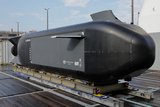
SeeMapper comprises a vessel deploying a real-time imagery chain to maintain continuous surveillance of the underwater environment, with a T-SAS performing high-quality mapping of the sea-bed. The vessel is also equipped with a fully automatic system to launch and recover the towed sonar. A command-and-control system is used for mission planning and management and to automatically analyse the data gathered.
Privately operated underwater installations such as offshore platforms, oil & gas installations, wind farms, and marine turbines can also deploy the system to monitor underwater installations to check that systems are operating correctly and to carry out maintenance.
The system has been qualified for operation in rough sea states, and requires only minimal training and no specialised skills for launching and recovering the towed sonar array.

More from Naval Warfare
-
![US turns to allies to tackle navy shipbuilding backlog]()
US turns to allies to tackle navy shipbuilding backlog
A White House memorandum acknowledges US Navy shipbuilding backlogs and a weakened industrial base, opening a formal path for South Korean and Japanese yards to help rebuild capacity.
-
![US Navy’s $275 billion BBGN plan hinges on shipyard transformation]()
US Navy’s $275 billion BBGN plan hinges on shipyard transformation
The US Navy’s planned nuclear-powered warship carries a US$275 billion price tag, but the greater story lies in the industrial overhaul needed to build it, from AI-enabled design to digital twins and modular construction.
-
![Asia-Pacific emerges as the largest export market for US-made USVs]()
Asia-Pacific emerges as the largest export market for US-made USVs
Asian customers have placed one of the largest known international purchases of US-built uncrewed surface vessels, highlighting accelerating regional demand for autonomous maritime capabilities and distributed naval operations.