


Suppliers await next step in Australia’s mine warfare transition
Australia’s mine countermeasure capability remains in flux as the Huon-class nears retirement, but accelerated investment in autonomous systems is opening a path for industry.


Airbus Defence and Space and Rohde & Schwarz aim to bring 6G secure communications to the naval domain. (Photo: Rohde & Schwarz)
Airbus Defence and Space and Rohde & Schwarz are cooperating ‘to bring integrated sixth-generation [6G] secure communications and electronic support solutions to navies’, the two companies announced on 19 October during Euronaval 2022 in Paris.
6G defence technologies ‘will revolutionise military secure communications and cooperative intelligence. This will enable the navy to better exploit the huge amount of information collected and distributed’, said Hansjörg Herrbold, VP of secure communications at Rohde & Schwarz.
With 6G, both companies expect that navies would benefit from extremely low latency communications of one microsecond, or 1,000 times faster than one millisecond. 6G-enabled networks would also be able to operate at higher frequencies than 5G.
Mobile edge computing with AI capabilities will be built into all 6G networks, whereas it must be added to existing 5G networks.
However, 6G is not yet ready for the field. Some commercial vendors are devoting R&D funds to the technology but industry and government specifications for 6G network-enabled solutions remain undefined.

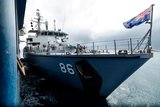
Australia’s mine countermeasure capability remains in flux as the Huon-class nears retirement, but accelerated investment in autonomous systems is opening a path for industry.
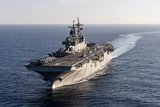
As the Iran War draws US ships and marine corps units away from the Indo-Pacific, curtailed exercises and a temporary carrier gap are exposing tensions between Washington’s demand for more self-reliant allies and the joint training needed to realise that ambition.
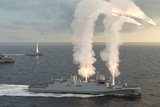
With Canada committed to its River-class replacement and the USN pursuing a lower-cost frigate, Rheinmetall will need to demonstrate where the GMF 140 can fill a capability gap in the North American fleet.

Australian businesses can now bid to support Virginia-class submarine sustainment in Western Australia, as momentum around the Henderson Defence Precinct also builds.
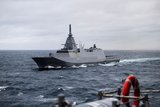
Washington’s search for a foreign-built frigate could hand South Korea, Japan and Turkey a larger prize than a double-hull order: a foothold inside the US shipbuilding industrial base.
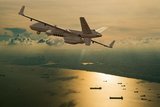
Japan’s FY2027 defence budget backs stand-off strike, a 17-aircraft MQ-9B buy and a declared bid to lead the world in uncrewed maritime assets, alongside new frigates, submarines and support ships.

Connect with us on socials


