


Suppliers await next step in Australia’s mine warfare transition
Australia’s mine countermeasure capability remains in flux as the Huon-class nears retirement, but accelerated investment in autonomous systems is opening a path for industry.


The navies of Belgium, the Netherlands and Portugal have set up a joint working arrangement with EID for the latest Integrated Communications Control System (ICCS6) system, the company announced on 23 January.
A contract with a maximum value of €15 million (US$17 million) is to be awarded by the Portuguese government for the supply of ten ICCS6 systems. Five systems will be installed on board Portuguese ships: two M-class frigates (Bartolomeu Dias and Dom Francisco de Almeida) and 3 Vasco da Gama class frigates.
Three systems will be fitted to the Royal Netherlands Navy (RNLN) M-Class frigates and the landing platform dock HNLMS Rotterdam. The two M-class frigates of the Belgian Navy (Leopold I and Louise-Marie) will also be upgraded.
The first vessel to receive ICCS6 will be a RNLN frigate whereas the last one will be a Portuguese MEKO200 in 2020.
ICCS6 features Internet Protocol technology and was designed specifically to provide an efficient ships communications management tool. With a high degree of automation, the system uses a modular and flexible concept, capable of being tailored and configured to meet the communications requirements of any type of warship.

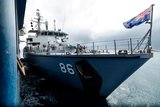
Australia’s mine countermeasure capability remains in flux as the Huon-class nears retirement, but accelerated investment in autonomous systems is opening a path for industry.
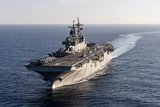
As the Iran War draws US ships and marine corps units away from the Indo-Pacific, curtailed exercises and a temporary carrier gap are exposing tensions between Washington’s demand for more self-reliant allies and the joint training needed to realise that ambition.
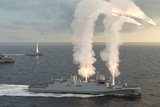
With Canada committed to its River-class replacement and the USN pursuing a lower-cost frigate, Rheinmetall will need to demonstrate where the GMF 140 can fill a capability gap in the North American fleet.

Australian businesses can now bid to support Virginia-class submarine sustainment in Western Australia, as momentum around the Henderson Defence Precinct also builds.
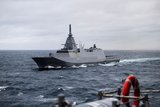
Washington’s search for a foreign-built frigate could hand South Korea, Japan and Turkey a larger prize than a double-hull order: a foothold inside the US shipbuilding industrial base.
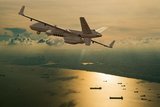
Japan’s FY2027 defence budget backs stand-off strike, a 17-aircraft MQ-9B buy and a declared bid to lead the world in uncrewed maritime assets, alongside new frigates, submarines and support ships.

Connect with us on socials


