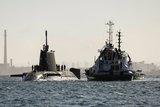
Effebi launches new vessel for Italian finance police
Tenente Petrucci is 44m long with a beam of about 8.6m.


A new fast patrol vessel for Italian law enforcement agency Guardia di Finanza was launched at the Effebi shipyard in Viareggio on 26 January.
Tenente Petrucci is 44m long with a beam of about 8.6m. Powered by waterjet propulsion and four MTU 16V2000M96L engines developing 1939kW at 2,450 rpm, the vessel has an operational radius of 700 miles (1,130km) at a top speed of 45kt. This allows ‘efficient patrolling in the Mediterranean Sea’, according to Effebi.
The patrol vessel has a crew of 23 and can accommodate up to 150 people during rescue operations. It is equipped with a fast-launchable tender via a ramp for rapid deployment on military and recovery operations.
Tenente Petrucci will be delivered in the coming months.
As part of our promise to deliver comprehensive coverage to our Defence Insight and Premium News subscribers, our curated defence news content provides the latest industry updates, contract awards and programme milestones.



More from Naval Warfare
-
![Kraken’s Royal Navy USV contract signals next step in crewed-uncrewed integration]()
Kraken’s Royal Navy USV contract signals next step in crewed-uncrewed integration
The UK Royal Navy’s rapid procurement of uncrewed platforms aligns with the force’s strategic shift towards a fleet better equipped to handle modern threats.
-
![HMS Anson’s milestone stay in Australia cut short during AUKUS deployment]()
HMS Anson’s milestone stay in Australia cut short during AUKUS deployment
The Astute-class submarine’s visit to Australia was the first time maintenance activity on a UK Royal Navy nuclear submarine had been carried out in the country.
-
![How Operation Epic Fury could reduce US readiness to face China]()
How Operation Epic Fury could reduce US readiness to face China
The offensive against Iran could impact training and maintenance cycles and accelerate the degradation of the US arsenal on top of depleting Washington’s stockpiles.
-
![UK Royal Navy explores modular counter-drone capabilities for future hybrid fleet]()
UK Royal Navy explores modular counter-drone capabilities for future hybrid fleet
The UK MoD is scoping out systems to counter the growing threat of uncrewed aerial systems, with a focus on low-cost modularity and speed to field.
-
![US Pentagon claims to have severely damaged Iranian capabilities, promises to increase attacks]()
US Pentagon claims to have severely damaged Iranian capabilities, promises to increase attacks
US military authorities claim to have sunk 20 Iranian vessels and destroyed Tehran’s Air Force, with the Pentagon making plans to send additional assets to the region.