Croatian Navy receives patrol vessel


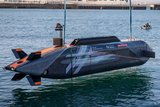
The Croatian Navy has received a new inshore patrol vessel, Omiš, in a ceremony in Split on 7 December.
The vessel, built by Croatian company Brodosplit, will now undergo a five-month testing phase, during which it will be tested to certify that it fulfils tactical and technical requirements.
The vessel is over 43.25m long and is fitted with an 30mm automatic gun, two manually operable 12.7mm machine guns and four portable air defence rocket systems.
The vessel will be deployed for patrol and SAR operations, as well as combat and logistic support when required.
General Mirko Šundov, chief of general staff of the Croatian armed forces, said: ‘The new inshore patrol vessel will enable Croatia’s coast guard perform its tasks the same as the modern world coast guards. By completing the first of the five planned inshore patrol vessels, the Croatian Navy has acquired new capabilities Omiš is a Croatian product, a result of enormous efforts and knowledge of the Croatian experts.’


More from Naval Warfare
-
![Poland’s naval modernisation plans point to $13 billion market]()
Poland’s naval modernisation plans point to $13 billion market
Poland is reshaping its naval capabilities through investments in surface and undersea fleets, with further procurement opportunities expected into the 2030s.
-
![Autonomy gives Turkey a chance to outflank established naval shipbuilders]()
Autonomy gives Turkey a chance to outflank established naval shipbuilders
Turkish shipbuilders have sold ships from Asia to Europe, but autonomy and swarm technology could give them a fairer fight against Western European rivals.
-
![Canada assesses security equipment changes for Polar Icebreaker Imnaryuaq]()
Canada assesses security equipment changes for Polar Icebreaker Imnaryuaq
The Canadian Department of National Defence is evaluating communications and reconnaissance changes for CCGS Imnaryuaq’s expanded maritime security role, while retaining its 2032 acceptance target.
-
![US Navy’s MQ-25 Stingray approaches carrier-integration tests]()
US Navy’s MQ-25 Stingray approaches carrier-integration tests
Boeing has outlined its upcoming precision-landing and carrier-airspace trials as MQ-25 manufacturing shifts towards Illinois, with initial Lot 1 deliveries expected in 2029.