China accuses USS Barry of incursion into territorial waters


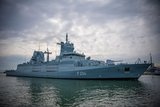
In the latest instance of Sino-US maritime tensions, the Chinese Ministry of National Defense (MND) has accused the Arleigh Burke-class guided missile destroyer USS Barry of trespassing into Chinese territorial waters.
According to a statement from the MND, the incursion occurred on 28 April near the Xisha Islands (also known as the Paracel Islands) in the South China Sea, prompting the Southern Theatre Command of the PLA to deploy air and naval assets to the area.
PLA forces were tasked with tracking, identifying, verifying and warning the USN vessel.
USS Barry is part of the US Pacific Fleet’s America Expeditionary Strike Group, which held live-fire training exercises in the South China Sea between 13-18 April alongside counterparts from the RAN.
China claims sovereignty over the Paracels, although this is disputed by Vietnam and Taiwan. USN vessels often sail near the islands.
Related Equipment in Defence Insight

You may also like

More from Naval Warfare
-
![Australian industry programme builds pipeline for Virginia-class sustainment]()
Australian industry programme builds pipeline for Virginia-class sustainment
Australian businesses can now bid to support Virginia-class submarine sustainment in Western Australia, as momentum around the Henderson Defence Precinct also builds.
-
![South Korea, Japan and Turkey vie for US shipbuilding access in future frigate contest]()
South Korea, Japan and Turkey vie for US shipbuilding access in future frigate contest
Washington’s search for a foreign-built frigate could hand South Korea, Japan and Turkey a larger prize than a double-hull order: a foothold inside the US shipbuilding industrial base.
-
![Japan’s FY2027 budget bets on stand-off systems to offset demographic decline]()
Japan’s FY2027 budget bets on stand-off systems to offset demographic decline
Japan’s FY2027 defence budget backs stand-off strike, a 17-aircraft MQ-9B buy and a declared bid to lead the world in uncrewed maritime assets, alongside new frigates, submarines and support ships.
-
![Russia’s uncrewed boat portfolio hints at future naval demand]()
Russia’s uncrewed boat portfolio hints at future naval demand
Ukrainian intelligence has catalogued more than 20 Russian uncrewed surface vessels, revealing a portfolio weighted towards mine warfare and logistics, with implications for Western naval investment.
-
![Ukraine’s new long-range 12m autonomous vessel can deploy other drones]()
Ukraine’s new long-range 12m autonomous vessel can deploy other drones
Ukraine’s UForce unveiled the MV11 uncrewed surface vessel, designed to launch and support other naval drones at sea, fuelling debate over the future of autonomous maritime task groups.