


The UK joins the movement towards joint procurement
The UK will spend an estimated US$3.89 billion over the next decade in joint naval programmes, a lot of which will be in cooperation with Norway.


The Canadian Surface Combatant (CSC) project encountered its latest rough patch as the Canadian government moved to publicly reject proposals not submitted through the formal process.
The procurement, which has already been underway for several years, will see investment in 15 CSC ships to provide Canada with the major surface commitment of its maritime combat power.
The Canadian government directly responded to media coverage that alluded to proposals submitted outside of the competitive process.
An official statement read: ‘To be clear, any proposals submitted outside of the established competitive process will not be considered. It should be noted that a
Our news & analysis is now part of Defence Insight®
A Basic-level or higher Defence Insight subscription is now required to view this content.

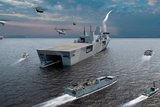
The UK will spend an estimated US$3.89 billion over the next decade in joint naval programmes, a lot of which will be in cooperation with Norway.
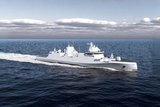
Rheinmetall has unveiled its first next-generation frigate design, showing ambitions to compete as a surface combatant prime contractor. While the company is targeting North America, analysts believe the concept may be better positioned for future European programmes.
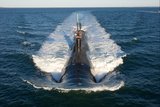
The US Department of War’s US$76.6 billion Columbia-and Virginia-class submarine contract gives industry demand certainty as Washington seeks to rebuild its shipbuilding base.
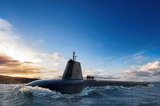
The UK government’s £8.4 billion Dreadnought Phase 4 investment sets aside £2.5 billion for the wider submarine supply chain, opening new work beyond BAE Systems’ prime contract.

Wallops Island trials will validate the next-generation radar's combat system integration before its installation aboard USS Pinckney, the first Flight IIA destroyer to receive the SPY-6(V)4 upgrade.
Hanwha Ocean is deepening ties with the US and eyeing a submarine opportunity in Saudi Arabia, as South Korea looks to convert its Canadian defeat into export momentum.

Connect with us on socials


