Better late than never: Spanish Navy commissions its first S-80A submarine more than 10 years behind schedule
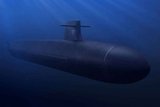
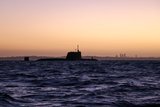
The commissioning of Isaac Peral (S-81) into Spanish Navy service finally puts Navantia and Spain in the top tier of naval shipbuilders, as well as among the list of countries that can design, build and operate diesel-electric submarines. (Photo: Navantia)
The S-80A Plus, a new class of ocean-going submarines, will enhance the Spanish Navy’s capabilities despite the challenges and delays experienced during their development and delivery.


Spanish shipbuilder Navantia has delivered the first of four new ocean-going submarines that will provide the Spanish Navy with a long-awaited modern diesel-electric attack submarine (SSK) capability for the 21st century.
The S-80A Plus submarines are advanced SSKs that can conduct anti-submarine warfare, anti-surface warfare and perform an intelligence, surveillance and reconnaissance role. They have the potential for an added land-attack capability in the future with the acquisition of the Tomahawk cruise missile.
At the commissioning of Isaac Peral (S-81) on 30 November, Navantia stated that the second boat, Narciso Monturiol (S-82), was having the sections of its hull joined together at
Our news & analysis is now part of Defence Insight®
A Basic-level or higher Defence Insight subscription is now required to view this content.


More from Naval Warfare
-
![Competitive P17B tender marks a shift in Indian Navy frigate procurement]()
Competitive P17B tender marks a shift in Indian Navy frigate procurement
The Indian Navy's P17B programme is expected to combine greater weapons capacity with a competitive domestic construction model, although key systems could remain dependent on international supply chains.
-
![Quantum Systems enters maritime domain with Baltic-focused USV and UUV]()
Quantum Systems enters maritime domain with Baltic-focused USV and UUV
Quantum Systems has launched into the maritime domain with Seavex and Subvex, aiming to close a Baltic Sea ISR gap opened by infrastructure sabotage.
-
![Suppliers await next step in Australia’s mine warfare transition]()
Suppliers await next step in Australia’s mine warfare transition
Australia’s mine countermeasure capability remains in flux as the Huon-class nears retirement, but accelerated investment in autonomous systems is opening a path for industry.
-
![Can the US Navy ask Indo-Pacific allies to do more while training with them less?]()
Can the US Navy ask Indo-Pacific allies to do more while training with them less?
As the Iran War draws US ships and marine corps units away from the Indo-Pacific, curtailed exercises and a temporary carrier gap are exposing tensions between Washington’s demand for more self-reliant allies and the joint training needed to realise that ambition.