BAE Systems to design next-gen SeaSparrow missile launch system
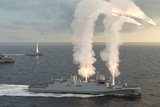
NGELS will replace the existing SeaSparrow launch systems. (Photo: Raytheon)
BAE Systems has been awarded a $37 million contract to develop the Next Generation Evolved SeaSparrow Missile Launch System (NGELS), providing the USN and allied countries with an enhanced ship self-defence capability.


BAE Systems will design the Next Generation Evolved SeaSparrow Missile Launch System (NGELS) under a $37 million US DoD Ordnance Technology Consortium using technology derived from the Mk41Vertical Launch System.
Under the contract, the company will support the NATO SeaSparrow Program Office to design and deliver prototype deck launching systems to Evolved SeaSparrow Missile (ESSM)ship self-defence system users.
NGELS is a deck-mounted,fixed-angle launcher that leverages BAE Systems’ Adaptable Deck Launcher(ADL) concept to store and launch ESSMs from the company’s Mk 25 missile canisters.
Related Articles
US Navy orders full-rate production support for Evolved Seasparrow Block 2
NGELS will support fielding the latest ESSM Block 2, a multi-role surface-to-air and surface-to-surface missile capable of protecting aircraft carriers and other flat-decked ships against advanced air and surface threats.
Related Equipment in Defence Insight


More from Naval Warfare
-
![How France’s SNLE 3G programme is reshaping the naval nuclear industrial base]()
How France’s SNLE 3G programme is reshaping the naval nuclear industrial base
Extending far beyond a four-submarine replacement programme, France’s ballistic missile submarine effort is a decades-long industrial initiative designed to preserve the country’s ability to build and sustain nuclear-powered strategic platforms.
-
![Quantum Systems enters maritime domain with Baltic-focused USV and UUV]()
Quantum Systems enters maritime domain with Baltic-focused USV and UUV
Quantum Systems has launched into the maritime domain with Seavex and Subvex, aiming to close a Baltic Sea ISR gap opened by infrastructure sabotage.
-
![Suppliers await next step in Australia’s mine warfare transition]()
Suppliers await next step in Australia’s mine warfare transition
Australia’s mine countermeasure capability remains in flux as the Huon-class nears retirement, but accelerated investment in autonomous systems is opening a path for industry.
-
![Can the US Navy ask Indo-Pacific allies to do more while training with them less?]()
Can the US Navy ask Indo-Pacific allies to do more while training with them less?
As the Iran War draws US ships and marine corps units away from the Indo-Pacific, curtailed exercises and a temporary carrier gap are exposing tensions between Washington’s demand for more self-reliant allies and the joint training needed to realise that ambition.
-
![How could Rheinmetall’s GMF 140 fit with ongoing programmes in North America?]()
How could Rheinmetall’s GMF 140 fit with ongoing programmes in North America?
With Canada committed to its River-class replacement and the USN pursuing a lower-cost frigate, Rheinmetall will need to demonstrate where the GMF 140 can fill a capability gap in the North American fleet.