Babcock backs both designs for Korean aircraft carrier
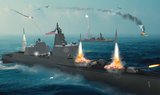
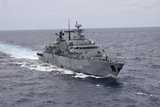
Babcock has been increasing its presence Korea, most recently with its investment in a facility in Busan. (Photo: Babcock)
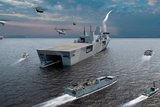
Babcock has signed an MoU with Daewoo Shipbuilding and is now backing both of the main contenders for Korea’s CVX programme.


Babcock has signed an MoU with Daewoo Shipbuilding & Marine Engineering, one of Korea’s largest shipyards, to collaborate on systems integration programmes for future vessels.
This follows the MoU signing between Babcock and Hyundai Heavy Industries (HHI) in June 2021 focusing on the South Korean Navy’s CV eXperimental (CVX) future light aircraft carrier programme.
As HHI and Daewoo Shipbuilding are the two major competitors for the CVX programme, Babcock appears to be guaranteed to influence the vessel’s design, bringing its experience designing and manufacturing the UK RN’s Queen Elizabeth-class carriers.
At the time of Babcock and HHI’s MoU signing, the potential for the CVX programme seemed tenuous, with debates questioning if an aircraft carrier would optimally address the Republic of Korea’s security concerns.
The National Defense Committee refused an application for KRW101 billion ($90.9 million) for CVX research requirements for FY2021, instead, the ministry was given just $900,000.
The rationale was that the projection of airpower a single carrier provides is less significant when considering the proximity of North Korea and insufficient when compared to the size and capabilities of the PLAN.
However, the Korean National Assembly approved the KRW7.2 billion (around $6.1 million) budget for CVX development in the final month of 2021 and the programme appears to be progressing.

You may also like
More from Naval Warfare
-
![US Navy’s $275 billion BBGN plan hinges on shipyard transformation]()
US Navy’s $275 billion BBGN plan hinges on shipyard transformation
The US Navy’s planned nuclear-powered warship carries a US$275 billion price tag, but the greater story lies in the industrial overhaul needed to build it, from AI-enabled design to digital twins and modular construction.
-
![Industry sees opportunity in Australia’s shift to networked undersea warfare]()
Industry sees opportunity in Australia’s shift to networked undersea warfare
Australia’s new defence innovation strategy indicates a shift from platform-centric to network-centric undersea warfare, with Ocius and Anduril Industries pointing to fast-growing opportunities for local industry.
-
![Asia-Pacific emerges as the largest export market for US-made USVs]()
Asia-Pacific emerges as the largest export market for US-made USVs
Asian customers have placed one of the largest known international purchases of US-built uncrewed surface vessels, highlighting accelerating regional demand for autonomous maritime capabilities and distributed naval operations.
-
![RTX confirms US Marine Corps and US Navy acquire Hadalus UUV]()
RTX confirms US Marine Corps and US Navy acquire Hadalus UUV
RTX told Shephard that the Hadalus UUV has been procured by the US Marine Corps and the Office of Naval Research for operational experimentation as the company prepares additional demonstrations with the US Navy, NATO and AUKUS partners.
-
![The UK joins the movement towards joint procurement]()
The UK joins the movement towards joint procurement
The UK will spend an estimated US$3.89 billion over the next decade in joint naval programmes, a lot of which will be in cooperation with Norway.