


UK’s $1 billion AUKUS support request signals strong ongoing US collaboration
The latest foreign military sales request from the UK has implications for the future of the programme and collaboration between the three nations.


Naval Group has committed to increasing Australian industry capability on the Future Submarine Program.
Earlier this month the Australian Minister for Defence, Linda Reynolds, met with the French Minister of Defence, Florence Parly, to discuss maximising Australian industry involvement in the programme. At that time an ongoing process was agreed to review the implementation of the programme on a quarterly basis for the rest of 2020.
On 24 February Reynolds announced that Naval Group has ‘committed to a level of Australian industry capability of at least 60 per cent of the contract value spent in Australia’.
Reynolds said: ‘While I welcome this commitment, the Morrison government will hold Naval Group to account on their contractual commitment to maximise Australian industry involvement in this programme, as per the objectives outlined in the Strategic Partnering Agreement.
‘Through this programme, we are growing Australia’s sovereign industrial base while delivering this important national security capability of 12 regionally superior submarines. The Future Submarine Program underpins the growing strategic partnership between Australia and France and I look forward to continuing my productive dialogue with Minister Parly as we deliver this critical national security capability.’
Australia’s SEA 1000 Attack-class Future Submarine Program, being led by Naval Group, will introduce a class of 12 new diesel electric powered attack boats to replace the Royal Australian Navy’s existing fleet of six Collins-class submarines.


The latest foreign military sales request from the UK has implications for the future of the programme and collaboration between the three nations.

The USCG plans to award a contract this year for the construction of Homeland Security Cutters. The new vessels will replace the 60-plus-year-old fleet of Light Icebreaking Tugs.

The expansion of the Redstone facility in Alabama will enable Raytheon to increase production of Standard Missiles in the location by 50% and support Washington in refilling stockpiles after recent operations have depleted the Pentagon’s reserves.
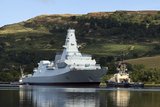
Major naval initiatives including the European Patrol Corvette programmes and Norway’s UK partnership-focused purchase of Type 26 frigates point to the growing interest in the advantages of commonality across allied navies.
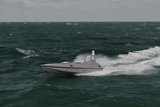
The UK Royal Navy’s rapid procurement of uncrewed platforms aligns with the force’s strategic shift towards a fleet better equipped to handle modern threats.
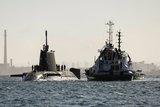
The Astute-class submarine’s visit to Australia was the first time maintenance activity on a UK Royal Navy nuclear submarine had been carried out in the country.

Connect with us on socials


