Australia to invest even more money in naval infrastructure
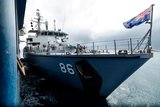
Apparent in the background of this photo is Fleet Base West in Henderson, Australia. A large new dry dock will be constructed there for naval use. (Department of Defence)
A large dry dock for Australia’s navy will be the centrepiece of new construction in Western Australia.


As part of its more assertive approach to defence amidst growing regional tensions, Australia announced on 15 March that it would invest A$4.3 billion ($3.09 billion) in upgrading naval facilities at Fleet Base West in Henderson, Western Australia.
The project will create the region’s first large-vessel dry dock, which will allow large vessels to be constructed, as well as maintenance of large naval and commercial vessels to occur.
Australian Naval Infrastructure, a government-owned entity, will supervise the design and build of this infrastructure. Work is to start next year, and the dry dock should be ready to receive its first
Our news & analysis is now part of Defence Insight®
A Basic-level or higher Defence Insight subscription is now required to view this content.



More from Naval Warfare
-
![Competitive P17B tender marks a shift in Indian Navy frigate procurement]()
Competitive P17B tender marks a shift in Indian Navy frigate procurement
The Indian Navy's P17B programme is expected to combine greater weapons capacity with a competitive domestic construction model, although key systems could remain dependent on international supply chains.
-
![How France’s SNLE 3G programme is reshaping the naval nuclear industrial base]()
How France’s SNLE 3G programme is reshaping the naval nuclear industrial base
Extending far beyond a four-submarine replacement programme, France’s ballistic missile submarine effort is a decades-long industrial initiative designed to preserve the country’s ability to build and sustain nuclear-powered strategic platforms.
-
![Quantum Systems enters maritime domain with Baltic-focused USV and UUV]()
Quantum Systems enters maritime domain with Baltic-focused USV and UUV
Quantum Systems has launched into the maritime domain with Seavex and Subvex, aiming to close a Baltic Sea ISR gap opened by infrastructure sabotage.
-
![Can the US Navy ask Indo-Pacific allies to do more while training with them less?]()
Can the US Navy ask Indo-Pacific allies to do more while training with them less?
As the Iran War draws US ships and marine corps units away from the Indo-Pacific, curtailed exercises and a temporary carrier gap are exposing tensions between Washington’s demand for more self-reliant allies and the joint training needed to realise that ambition.