Austal USA wins LCS post-delivery services work


Austal USA has received a $43.36 million contract modification from the DoD, under the Defense Production Act (DPA), to exercise options on post-delivery services for the USN Littoral Combat Ship (LCS) programme.
Austal will provide design services to all LCS ships and services. These services may include programme management, fitting out services, change processing, software maintenance, engineering, and lifecycle efforts.
The company will also maintain an Integrated Data Product Model Environment for the USN to access to enterprise LCS data management.
‘The continued award of LCS post-delivery services contracts reflects the Navy’s ongoing confidence in Austal to perform quality work throughout the life cycle of the ship,’ said Austal USA President Craig Perciavalle.
Austal is expected to match the DPA agreement funding, as it invests in its US facility in Mobile, Alabama.
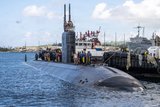
The company delivered its 11th LCS vessel, the future USS Kansas City (pictured), to the USN in February 2020.
As part of our promise to deliver comprehensive coverage to our Defence Insight and Premium News subscribers, our curated defence news content provides the latest industry updates, contract awards and programme milestones.
Related Programmes in Defence Insight
Related Equipment in Defence Insight


More from Naval Warfare
-
![Five years on: where could opportunities emerge next for AUKUS Pillar II?]()
Five years on: where could opportunities emerge next for AUKUS Pillar II?
Payload commonality, combat systems and electronic warfare are emerging as likely priorities as the trilateral partnership balances building submarines with sharing industrial ecosystems.
-
![Singapore expands maritime presence with future-ready Sentinel OPV]()
Singapore expands maritime presence with future-ready Sentinel OPV
Singapore is building space for uncrewed systems and future technologies into its new Sentinel-class OPVs, reflecting a wider move towards adaptable vessels capable of maintaining persistent maritime presence.
-
![From the Baltic to the Gulf: where USV procurement is heading next]()
From the Baltic to the Gulf: where USV procurement is heading next
Saildrone’s new Copenhagen base is one sign of a larger shift, as navies globally turn to uncrewed vessels for surveillance and mine clearance.
-
![Israeli Navy looks to expand as war reshapes future force requirements]()
Israeli Navy looks to expand as war reshapes future force requirements
Israel’s navy is preparing for a larger and more technically diverse role, but its ambitions could be impacted by supply chain restrictions, accelerating demand for domestic naval production as well as autonomous maritime capabilities.
-
![Quantum sensing gathers pace as navies eye undersea advantage]()
Quantum sensing gathers pace as navies eye undersea advantage
As AI dominates defence conversations, industry increasingly points to quantum sensing as the technology set to change submarine and uncrewed underwater vehicle operations.