Aselsan test-fires Turkey’s first indigenous naval defence missile
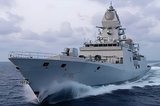
TCG Beykoz during the Goksur test firing. (Photo: Aselsan)
The test of the Goksur missile is regarded as a pivotal moment of Turkey’s journey towards developing an indigenous naval defence capability.


Turkish defence firm Aselsan has conducted the first test launch of Goksur, the country’s indigenous naval point defence missile system.
Goksur is regarded as a critical component of the Steel Dome defence system, which protects the country’s naval assets against a wide variety of threats, from anti-ship and cruise missiles, through armed and unarmed UAVs, to fighter jets and helicopters.
The Goksur imaging IR (IIR) missile features a modular design, which means it can be adapted to a variety of vessels within the Turkish Navy, from corvettes to frigates.
Related Articles
Turkey reveals mockups for its first entirely indigenous aircraft carrier
Turkey begins steel-cutting on MUGEM and MiLDEN vessels
The missile system is available in multiple configurations, including the 100-N VLS (vertical launch system), the 100-N/StA (a turret system that can operate in standalone mode), and the100-N, (a new 20-missile configuration, which features the IIR missile).
Those configurations, according to Aselsan, allow Goksur to offer 360-degree threat elimination, including a high level of effectiveness against low-flying targets. The company has also included an AI-supported fire control system to address human error under pressure.
Goksur’s bi-directional data link function provides up- and downlink mid-course guidance, allowing it to maintain the effectiveness of its targeting through an often rapidly-changing threat environment. That enhances its potential effectiveness against fast-moving targets.
Goksur was a joint development project between Aselsan and Tubitak Sage, and its first launch was conducted from the TCG Beykoz on 16 February, off the coast of Sinop in northern Turkey.



More from Naval Warfare
-
![Five years on: where could opportunities emerge next for AUKUS Pillar II?]()
Five years on: where could opportunities emerge next for AUKUS Pillar II?
Payload commonality, combat systems and electronic warfare are emerging as likely priorities as the trilateral partnership balances building submarines with sharing industrial ecosystems.
-
![From the Baltic to the Gulf: where USV procurement is heading next]()
From the Baltic to the Gulf: where USV procurement is heading next
Saildrone’s new Copenhagen base is one sign of a larger shift, as navies globally turn to uncrewed vessels for surveillance and mine clearance.
-
![Israeli Navy looks to expand as war reshapes future force requirements]()
Israeli Navy looks to expand as war reshapes future force requirements
Israel’s navy is preparing for a larger and more technically diverse role, but its ambitions could be impacted by supply chain restrictions, accelerating demand for domestic naval production as well as autonomous maritime capabilities.
-
![Quantum sensing gathers pace as navies eye undersea advantage]()
Quantum sensing gathers pace as navies eye undersea advantage
As AI dominates defence conversations, industry increasingly points to quantum sensing as the technology set to change submarine and uncrewed underwater vehicle operations.