2G Robotics scanning system deliveries begin


2G Robotics has begun deliveries of ULS-500 PRO laser scanning systems to Kongsberg Maritime, the company announced on 3 January.
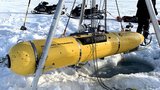
The first our four scanning systems have been delivered for integration into the Hugin AUVs ordered by the Norwegian Defence Materiel Agency in March 2017.
The Hugin AUVs will be deployed to complete surveys of subsea environments to locate and identify mines. The Hugin systems enable users to conduct fast and efficient operations with zero surface visibility while additionally improving safety conditions by allowing personnel to remain outside the minefield.
The ULS-500 PRO underwater laser scanner system will contribute to the detection, classification, and assessment of mines. The system acquires data in real-time and provides the operator with 3D models of targets and environments with sub-centimetre accuracy.
The laser scanning system also includes the 2G Observer, an ultra-sensitive stills camera able to capture images at 12fps, and the 2G Nova, an LED panel designed specifically for AUV integration providing almost 1,000,000 lumens.
Related Equipment in Defence Insight




More from Naval Warfare
-
![Canada assesses security equipment changes for Polar Icebreaker Imnaryuaq]()
Canada assesses security equipment changes for Polar Icebreaker Imnaryuaq
The Canadian Department of National Defence is evaluating communications and reconnaissance changes for CCGS Imnaryuaq’s expanded maritime security role, while retaining its 2032 acceptance target.
-
![US Navy’s MQ-25 Stingray approaches carrier-integration tests]()
US Navy’s MQ-25 Stingray approaches carrier-integration tests
Boeing has outlined its upcoming precision-landing and carrier-airspace trials as MQ-25 manufacturing shifts towards Illinois, with initial Lot 1 deliveries expected in 2029.
-
![From Poland to the Pacific: can Miecznik become a blueprint for other navies?]()
From Poland to the Pacific: can Miecznik become a blueprint for other navies?
Babcock is taking its Polish industrial partnership approach to Denmark and New Zealand as navies seek sovereign shipbuilding skills alongside ships.
-
![Unsettled waters in the North: can navies still trust their Arctic acoustic maps?]()
Unsettled waters in the North: can navies still trust their Arctic acoustic maps?
The changing Arctic environment is creating new challenges for submarine detection, driving demand for distributed sensors, uncrewed underwater vehicles and real-time acoustic modelling.