JLTV testing completes in California


The US Army and Marine Corps has completed testing of the Joint Light Tactical Vehicle (JLTV) at the Marine Corps Air Ground Combat Center in Twentynine Palms, California.
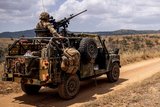
Soldiers from Bravo Troop, 1st Squadron, 33rd Cavalry Regiment, 3rd Brigade, 101st Airborne Division and marines of Weapons Company, 1st Battalion, 7th Marine Regiment put the JLTV through its paces by conducting real-world missions in an operational environment.
The testing started in late February 2018 in order to collect data to address operational effectiveness, suitability and survivability of the JLTV in its intended environment. A total of 39 JLTVs in two variants - combat tactical vehicle and combat support vehicle - were tested. The vehicles were configured with a range of mission packages including heavy guns carrier, general purpose, close combat weapons carrier and the utility version.
The Marine Corps Air Ground Combat Center provided a realistic desert environment to allow the Department of Defense to test how well the JLTV supports required mission execution.
The marines also tested live fire and helicopter sling load operations, as well as amphibious landing missions at Camp Pendleton.
The army, lead for the JLTV portfolio, plans to purchase some 49,000 JLTVs while the marine corps plans to purchase 9,000.
Related Equipment in Defence Insight

More from Land Warfare
-
![US pours another $23 billion into Arsenal of Freedom to ramp up missile production]()
US pours another $23 billion into Arsenal of Freedom to ramp up missile production
The US Department of Defense (DoD) is spending billions of dollars to accelerate missile production to meet demands from the war against Iran and requirements in Ukraine. Manufacture of SM-3 and PAC-3 interceptors is being ramped up, alongside a $22.9 billion commitment to Tomahawk cruise missiles.
-
![Rheinmetall advances longer 155mm ordnance with 30% range increase]()
Rheinmetall advances longer 155mm ordnance with 30% range increase
Rheinmetall has begun initial firing trials of a new 155mm/60-calibre artillery ordnance that could deliver up to 30% greater range than its existing 155mm/52-calibre system, as production of the current gun expands across Germany and the UK.
-
![Trans-European iMUGS2 uncrewed systems programme set for three-day exercise in 2028]()
Trans-European iMUGS2 uncrewed systems programme set for three-day exercise in 2028
The next stage of the Integrated Modular Unmanned Ground System (iMUGS) programme, dubbed iMUGS2, was launched in November 2025. Three major demonstrations are planned before the end of 2028.