US Army weighs next-gen combat vehicle acceleration


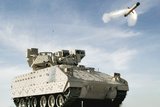
The Pentagon’s FY19 budget might still be hot off the press but the US Army is under pressure to determine if it can accelerate its next generation combat vehicle (NGCV) to ensure adequate dollars make it into the FY20 request.
When the army delivered its FY19 budget request to Congress on 12 February, it included various NGCV development line items like $119.3 million for a prototyping phase.
Another line asks for $6 million so that engineers can conduct ‘autonomous and semi-autonomous mobility, countermobility and construction missions’ for the future tank’s manoeuvre robotics and autonomous systems.
Although tentative plans
Our news & analysis is now part of Defence Insight®
A Basic-level or higher Defence Insight subscription is now required to view this content.

More from Land Warfare
-
![AUSA 2026: companies adapt munitions and missiles for greater effect at lower costs]()
AUSA 2026: companies adapt munitions and missiles for greater effect at lower costs
Rather than developing entirely new weapons, defence companies are looking to build on existing weapons and systems to deliver greater capability, control costs and accelerate fielding.
-
![With changing patterns in Middle Eastern procurement, is Europe missing out?]()
With changing patterns in Middle Eastern procurement, is Europe missing out?
Traditional suppliers are struggling to meet the Middle East’s armoured vehicle modernisation needs, creating opportunities for South Korean manufacturers and regional defence industries.
-
![AUSA 2026: CUAS market expands as suppliers target new threats and operational requirements]()
AUSA 2026: CUAS market expands as suppliers target new threats and operational requirements
New developments from MARSS, MyDefence, Mountain Horse Solutions and Rafael suggest that future counter-drone protection will increasingly depend on combining advanced detection, rapid interception and integrated defensive networks.