Transport testing underway for Land 400 Phase 2


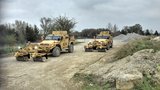
Trials of Australia’s Land 400 Phase 2 contenders have taken place on HMAS Canberra to determine whether the tendered vehicles can be deployed to designated theatres.
Land 400 Phase 2 is seeking a vehicle to provide a mounted combat reconnaissance capability, a replacement for the Australian light armoured vehicle.
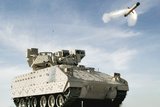
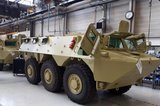
Contenders for the programme are the Rheinmetall Defence Boxer multi-role armoured vehicle and the BAE Systems-Patria AMV35 armoured modular vehicle.
According to the Royal Australian Navy, the vehicles undertook a series of trials on amphibious ship HMAS Canberra at Fleet Base East in Sydney in December 2016.
The two vehicles were loaded over Canberra’s side ramps into the heavy vehicle deck, where they were positioned to drive on board the ship’s landing craft.
Lt Col Chris McKendry, project manager test and evaluation of Land 400, said the trial was a success.
‘The trial was conducted in order to meet some of the objectives of the phase two user evaluation. Specifically, this was to determine if the tendered vehicles can be deployed to all designated theatres.
‘There is now the potential for some follow-on work with the amphibious assault ships in 2017 to confirm loads on the landing craft.’
The project will now continue the vehicle performance assessment at Monegeetta in Victoria before heading to Puckapunyal.
Transportability testing for other strategic lift assets such as the Royal Australian Air Force’s C-17 is due to commence in mid-2017.
Related Equipment in Defence Insight

More from Land Warfare
-
![AUSA 2026: companies adapt munitions and missiles for greater effect at lower costs]()
AUSA 2026: companies adapt munitions and missiles for greater effect at lower costs
Rather than developing entirely new weapons, defence companies are looking to build on existing weapons and systems to deliver greater capability, control costs and accelerate fielding.
-
![With changing patterns in Middle Eastern procurement, is Europe missing out?]()
With changing patterns in Middle Eastern procurement, is Europe missing out?
Traditional suppliers are struggling to meet the Middle East’s armoured vehicle modernisation needs, creating opportunities for South Korean manufacturers and regional defence industries.
-
![AUSA 2026: CUAS market expands as suppliers target new threats and operational requirements]()
AUSA 2026: CUAS market expands as suppliers target new threats and operational requirements
New developments from MARSS, MyDefence, Mountain Horse Solutions and Rafael suggest that future counter-drone protection will increasingly depend on combining advanced detection, rapid interception and integrated defensive networks.