The challenge of making the inflatable illusion and training centre
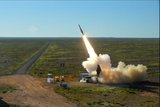
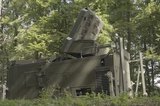
HIMARS is one of the more complex inflatables i2K Defense has made. (Photo: i2K Defense)
Faking aircraft, yanks and vehicles has a storied history through the previous century but there are others uses for inflatable systems such as more detailed and classified military equipment and training structures.


Traditionally inflatable systems have been used for decoys of basic military vehicles and aircraft and more recently to create tactical training environments, but makers are also rising up to the challenge of creating more classified platforms with less physical data.
Portable shoot houses enable creation of a realistic tactical training environment using reconfigurable rubber walls, removing the need to rely on and possibly damage existing buildings. However, the same technology is finding fresh application in the often highly classified sphere of creating battlefield decoys of High Mobility Artillery Rocket Systems (HIMARS) and other weapon systems.
Stacy Gray, government sales consultant
Our news & analysis is now part of Defence Insight®
A Basic-level or higher Defence Insight subscription is now required to view this content.

More from Land Warfare
-
![Australia’s SM-2 land trial could reshape ADF medium-range air defence plans]()
Australia’s SM-2 land trial could reshape ADF medium-range air defence plans
The first ground launch of the SM-2 could offer Canberra a path to expand its missile defence capability by adapting systems already fielded across the ADF.
-
![UK hits pause on deployable mortar system procurement as US begins search]()
UK hits pause on deployable mortar system procurement as US begins search
The US Army's market survey into available 81mm and 120mm mobile mortar systems was launched only a few days after the UK suspended Project Stokes, an almost identical plan, “pending future decisions on prioritisation, resourcing and funding”.
-
![New teams form to compete for British Army Land Rover replacement]()
New teams form to compete for British Army Land Rover replacement
The UK’s Land Mobility Programme Light Mobility Vehicle requirement is designed to replace the British Army’s ageing fleet of Land Rovers with a vehicle with a Gross Vehicular Mass of less than 3,500kg. It could be for as many as 6,000 vehicles.