Thales and Rheinmetall team up to support Aussie Land 400 programme
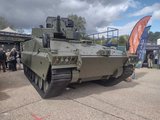
The Boxer CRV programme is worth A$5.9 billion in total. (Photo: Rheinmetall)
Thales Australia will manufacture components for the Rheinmetall MK 30-2 30mm cannon that will equip the Boxer CRV.


The Australian Minister for Defence Industry Melissa Price and the Minister for Veteran’s Affairs Andrew Gee announced on 28 September a new manufacturing partnership between Rheinmetall Defence Australia and Thales Australia to support the Land 400 Phase 2 programme.
Thales Australia’s Lithgow facility in New South Wales has commenced manufacturing components for the Rheinmetall MK 30-2 30mm cannon that will equip the Boxer CRV.
According to Thales, this partnership will provide substantial technology transfer to Australia in support of a number of defence projects with a target of 100% Australian Industry Capability.
It ‘will be a significant driver of growth in sovereign capability, boosting investment in SMEs, R&D and delivering long-term jobs,’ the press release noted.
The joint effort will also look at transferring to Australia the manufacture and sustainment of a range of mounted weapons, combining Thales Australia’s manufacturing expertise and domestic supplier base with Rheinmetall’s mounted weapons.
As Thales pointed out, approximately 50% of the work in Lithgow facility will be done by SME suppliers, and the overall Australian Industrial Capability is already over 85%.
The first samples manufactured in Australia have already passed quality control checks by Rheinmetall Defence in Germany.
Shephard Defence Insight notes that Land 400 Phase 2 is the largest and most expensive project in the history of the Australian Army.
In total, the programme is worth A$5.879 billion ($3.912 billion), which covers both procurement of Boxer platforms and initial sustainment costs.
Related Programmes in Defence Insight
Land 400 Phase 2 - Boxer CRV [Australia]
Related Equipment in Defence Insight

More from Land Warfare
-
![Air defence offerings multiply in anticipation of emerging requirements]()
Air defence offerings multiply in anticipation of emerging requirements
Air defence and counter-drone weapons continue to be developed, tested and demonstrated in anticipation of growing demand, with most solutions designed to be platform-agnostic and readily integrated onto suitable platforms.
-
![Tulpar firing trials expand Hitfact Mk II platform options]()
Tulpar firing trials expand Hitfact Mk II platform options
Firing trials of the Tulpar and Leonardo Hitfact Mk II combination follow an integration programme covering mechanical, electrical, electronic and software interfaces.
-
![How to breach a minefield: from traditional systems to modern techniques in action]()
How to breach a minefield: from traditional systems to modern techniques in action
The news from Ukraine has again shown that antitank minefields and other obstacles on the battlefield, such as deep trenches, can play a key role in both offensive and defensive operations. Given this, there will always be a need to clear them, both during and after a conflict.