


FNSS advances Indonesian Kaplan APC programme as local production expands
FNSS and PT Pindad are progressing the Indonesian tracked armoured personnel carrier programme as local production gets under way.


The Carl-Gustaf M4 has been in service with more than eight countries. (Photo: Saab)
Poland has become the latest operator of the Carl-Gustaf M4 multi-rocket shoulder launched weapon with the announcement on 4 March that it had placed a SEK12.9 billion (US$1.2 billion) with manufacturer Saab.
The contract will be for launchers, ammunition and training equipment with a contract period of 2024–27 and the company saying it expected the order to be booked before the middle of the year.
The announcement of the contract came on the same day that Saab said it had received approval for 100% ownership of Carl-Gustaf manufacturing facility in India which will help it meet industrial ‘Make in India’ requirements.
Saab’s Carl-Gustaf system has been in service with the Indian Army since 1976 and is the main shoulder launched weapon in the Indian Armed Forces.
The ammunition family has been expanded to include four anti-armour rounds, four multi-role/anti-structure rounds, three anti-personnel rounds and two support (smoke and illumination) rounds. In addition, there will be two types of 84mm practice rounds, and 20mm and 7.62mm training ammunition.
Saab has also developed a ‘smart’ high-explosive (HE) round and a guided missile concept. The new munitions will be able to fully utilise the smart features integrated in the M4 variant, including an ability to wirelessly programme the round’s fuse using data from an integrated fire control system.

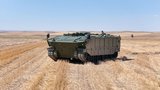
FNSS and PT Pindad are progressing the Indonesian tracked armoured personnel carrier programme as local production gets under way.
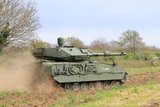
Firing trials of the Tulpar and Leonardo Hitfact Mk II combination follow an integration programme covering mechanical, electrical, electronic and software interfaces.
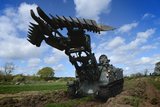
The news from Ukraine has again shown that antitank minefields and other obstacles on the battlefield, such as deep trenches, can play a key role in both offensive and defensive operations. Given this, there will always be a need to clear them, both during and after a conflict.
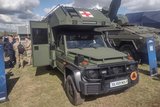
The UK Ministry of Defence has avoided being prescriptive in its search to replace the British Army’s Land Rover, meaning vehicle types being offered range from Land Rover Defender Wolf II and Humvee to the hybrid series Fering Pioneer. What does this mean for the procurement process?

The introduction of Ajax vehicles into British Army service was stopped after operator health issues were reported during an exercise, but manufacturer General Dynamics Land Systems UK believes work over the past 10 months has dealt with the problems.

Sweden, Croatia and France are pursuing different rocket artillery solutions as European armies seek greater reach, survivability and industrial resilience.

Connect with us on socials


