Rheinmetall Lynx stalks Czech Army


Rheinmetall has put forward its Lynx armoured vehicle for the Czech Army’s infantry fighting vehicle (IFV) replacement programme, the company announced on 17 April.
The army has plans to procure over 200 medium-weight fighting vehicles as it looks to replace its Soviet-era platforms, including the BMP-2.
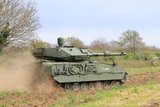
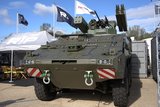
Lynx features the Lance turret system, the main armament of which is an airburst-capable automatic cannon available in 30mm and 35mm versions. The cannon allows Lynx to engage targets at ranges of up to 3,000 metres, even while on the move.
The vehicle can be fitted with various antitank guided missiles such as the EuroSPIKE. Other effector options include advanced electronic countermeasures and remotely controlled weapon stations.
The vehicle comes in two versions: KF31 and KF41. The KF41 weighs more than 40 tonnes and can carry three crew members and eight fully-equipped infantrymen. The Lynx KF31 weighs up to 38 tonnes and can seat three crew members and six fully-equipped troops. Both vehicles can be configured for missions including medevac operations, repair and recovery, reconnaissance and command and control.
Related Equipment in Defence Insight

More from Land Warfare
-
![Tulpar firing trials expand Hitfact Mk II platform options]()
Tulpar firing trials expand Hitfact Mk II platform options
Firing trials of the Tulpar and Leonardo Hitfact Mk II combination follow an integration programme covering mechanical, electrical, electronic and software interfaces.
-
![How to breach a minefield: from traditional systems to modern techniques in action]()
How to breach a minefield: from traditional systems to modern techniques in action
The news from Ukraine has again shown that antitank minefields and other obstacles on the battlefield, such as deep trenches, can play a key role in both offensive and defensive operations. Given this, there will always be a need to clear them, both during and after a conflict.
-
![British Army's open plan draws diverse offerings for Land Rover replacement]()
British Army's open plan draws diverse offerings for Land Rover replacement
The UK Ministry of Defence has avoided being prescriptive in its search to replace the British Army’s Land Rover, meaning vehicle types being offered range from Land Rover Defender Wolf II and Humvee to the hybrid series Fering Pioneer. What does this mean for the procurement process?