Raytheon wins Norwegian NASAMS contract


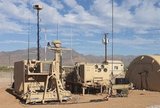
Raytheon has announced that it has been awarded a multimillion-dollar contract to provide International High-Mobility Launchers (HMLs) to the Royal Norwegian Air Force (RNoAF) as part of its National Advanced Surface-to-Air Missile System (NASAMS). Raytheon made the announcement in a 12 December 2011 company statement.
According to Raytheon, the HML is a lightweight missile launch platform that can carry up to six AMRAAM missiles mounted on a High-Mobility Multi-Wheeled Vehicle. The contract is part of the Royal Norwegian effort to upgrade, modernize and sustain RNoAF’s NASAMS through the NASAMS Robustness Program.
Produced in partnership with KONGSBERG, NASAMS maximizes the warfighter’s ability to identify, engage and destroy current and evolving enemy aircraft, UAV or cruise missile threats. It is a highly-mobile, quick reaction, easily deployable system.
Raytheon said the International HML will provide current and future NASAMS users with increased air defence capability, including C-130 roll-on and roll-off agility. In addition, Raytheon will upgrade electronics for the canister launcher fleet to provide common launch electronics for both canister and HML launchers, for easier maintenance and reduced life-cycle costs.




More from Land Warfare
-
![Polaris expands Arctic mobility offering as US military orders grow]()
Polaris expands Arctic mobility offering as US military orders grow
The Military 850 Voyageur 155 Crossover has secured orders from the US Army, Air Force and Marine Corps, addressing demand for agile Arctic mobility with passenger, cargo and towing capacity.
-
![Northrop Grumman pushing ahead with smaller Integrated Battle Command System]()
Northrop Grumman pushing ahead with smaller Integrated Battle Command System
Northrop Grumman’s Integrated Battle Command System is in service with Polish forces and is being introduced to US forces, with further development underway on the original platform as well as a smaller, more mobile system.
-
![UK’s ground-based air defence effort remains in assessment phase after third industry day]()
UK’s ground-based air defence effort remains in assessment phase after third industry day
The UK’s plan to introduce a new air defence capability into the British Army will cover short and medium-range defence as well as counter-uncrewed aerial system systems. Timelines are not yet laid out but industry is making plans.