


Canada accelerates uncrewed aerial system procurement for NATO and Arctic forces
Canada plans to acquire at least 120 uncrewed aerial systems through two competitions with combined funding ceilings of C$32 million.


Rafael is to deepen its industrial co-operation in Poland with Mesko, after the two companies agreed on 14 July to co-produce the Spike Short Range (SR) ATGM under the Pustelnik programme.
Missile components will be produced in Poland by PGZ subsidiary Mesko.
The main objective of Pustelnik is to equip the Polish Army and Territorial Defence Forces with anti-tank weapon systems that are convenient to transport and easy to operate on a conventional battlefield against enemy mechanised forces.
In February 2020, Rafael signed a technology transfer agreement with PGZ and its subsidiaries such as Mesko, which already manufactures Spike LR long-range ATGMs under licence for the Polish Armed Forces.
As part of our promise to deliver comprehensive coverage to our Defence Insight and Premium News subscribers, our curated defence news content provides the latest industry updates, contract awards and programme milestones.


Canada plans to acquire at least 120 uncrewed aerial systems through two competitions with combined funding ceilings of C$32 million.

New counter-drone technologies, autonomous launchers and manufacturing modernisation initiatives highlighted emerging opportunities for defence suppliers, while the UK advanced a major military vehicle procurement programme.

Non-US companies are increasingly looking to establish subsidiary and partnerships to access the potential billions of dollars of vehicle and land systems contracts and there has already been some success.

Pearson Engineering has provided equipment and engineering expertise to the Armed Forces of Ukraine since the beginning of the full-scale Russian invasion in 2022. The British company is now working to deepen engagement with the Ukrainian defence industry, expanding its support for the country’s population and laying the foundations for future technological innovation.
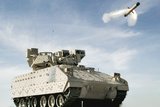
Rather than developing entirely new weapons, defence companies are looking to build on existing weapons and systems to deliver greater capability, control costs and accelerate fielding.

With a production rate of more than 10 million vehicles annually, the US commercial car and vehicle manufacturing base is second only to China. Defence companies are looking at how the vehicles, technology and manufacturing capability can support programmes.

Connect with us on socials


