


Companies downselected for British Army vehicle programme
It is believed that three companies did not make the downselect but a dark horse in Spain’s Iturri is believed to have got through.


Lockheed Martin’s Squad Mission Support System (SMSS) autonomous vehicle will demonstrate its rugged maneuverability while meeting Soldiers’ needs to recharge batteries in Portable Power Excursion (PPE) tests next month at Fort Riley, KS.
The Portable Power Excursion test is part of the larger Nett Warrior program, which will use the PPE tests to collect data and form a strategy to help alleviate a Soldier’s weight burden, while still providing long-lasting, reliable power critical to today’s missions.
“Soldiers deserve the best possible situational awareness, communications, optics, sensors and protection, and the SMSS will help power it all and relieve their burden,” said Jim Gribschaw, director of Combat Maneuver Systems at Lockheed Martin Missiles and Fire Control. “SMSS represents much more than a portable charging station; it can carry more than half a ton of the Warfighters’ supplies and can autonomously follow the squad, allowing the Soldier to put down the remote control and focus on the fight.”
Lockheed Martin’s SMSS vehicle will cycle through three test Companies from the 1st BDE, 1 Infantry Division during the Nett Warrior excursion demonstration scheduled in November. During that time, SMSS will maneuver with Soldiers and provide two kilowatts to four kilowatts of power. With the requisite number of chargers, the SMSS is capable of charging 146 batteries within 10 hours.
In addition to six Soldier battery chargers and a complement of batteries, the SMSS will carry and power a Mobile Network Integration Kit to improve communications from the network to the platoon, as well as transport up to 600 pounds of other Soldier gear.
Nett Warrior, managed by the US Army’s Product Manager Ground Soldier, is a set of Soldier-worn, battle tracking technologies that provide dismounted Soldiers with increased situational awareness, better reaction time and reduced risk of fratricide. Nett Warrior is designed for Infantry Brigade Combat Teams. A Nett Warrior-equipped Rifle platoon, along with all of its organic radio power consumers, will consume the power of 140 batteries per day. The collection of batteries required for one 24-hour mission weighs 155 pounds.
When completed, the PPE’s safety release for operating by and among Soldiers will be the fourth military-issued safety release for the SMSS vehicle.
Source: Lockheed Martin


It is believed that three companies did not make the downselect but a dark horse in Spain’s Iturri is believed to have got through.
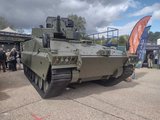
Air defence and counter-drone weapons continue to be developed, tested and demonstrated in anticipation of growing demand, with most solutions designed to be platform-agnostic and readily integrated onto suitable platforms.
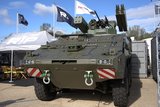
The US Army began its search for a 155mm tracked mobile tactical cannon in an effort that Shephard forecasts could be worth billions of dollars. Meanwhile, the UK DVD exhibition saw companies showcase their offerings for the British Army’s mobility and air defence requirements.
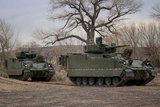
The development demonstrates how the platform could provide additional firepower and growth potential while the US Army progresses its long-term replacement for the Bradley.
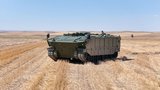
FNSS and PT Pindad are progressing the Indonesian tracked armoured personnel carrier programme as local production gets under way.
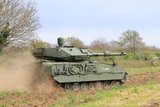
Firing trials of the Tulpar and Leonardo Hitfact Mk II combination follow an integration programme covering mechanical, electrical, electronic and software interfaces.

Connect with us on socials


