


Europe commits to long-range fires but countries move in different directions
Sweden, Croatia and France are pursuing different rocket artillery solutions as European armies seek greater reach, survivability and industrial resilience.


Lockheed Martin has delivered the first Digital Air Ground Integration Range (DAGIR) range to the US Army, allowing the force to conduct more realistic live fire training and accelerate learning. Delivery to the US Army Program Executive Office Simulation, Training and Instrumentation (PEO STRI) was announced on 9 October.
Delivered under the Digital Range Training System (DRTS) programme, DAGIR integrates air and ground assets across a digitally powered range, providing higher-fidelity performance data so that soldiers receive more comprehensive feedback during training.
The system allows ground manoeuvre units and attack aviation to coordinate, synchronise and engage targets in the same battle space for maximum weapons training effectiveness.
Jim Weitzel, vice president of training solutions, Lockheed Martin’s Mission System and Training business, said: ‘The DAGIR offers more realistic training, helping soldiers, crews and platoons build confidence as they prepare for missions they’ll face in today’s operational environment. As the leader in military training and simulation, Lockheed Martin integrated a variety of innovative technologies to make DAGIR the most advanced digital US Army range in existence today.’
From crew-level to platoons, soldiers are immersed in realistic live fire training exercises with threat, neutral and friendly simulations. New technologies added include the insertion of after-action review capabilities with almost movie-like visuals, ensuring vehicle crew evaluators have top-calibre visual, audio and virtual feedback to help crews learn from their training experience.


Sweden, Croatia and France are pursuing different rocket artillery solutions as European armies seek greater reach, survivability and industrial resilience.
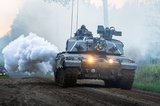
The bilateral agreement between the UK and Estonia comes as both countries explore how dispersed troops, drones, digital targeting, anti-tank weapons and increasingly long-range fires can complement the combat mass traditionally provided by heavy armour.

The Military 850 Voyageur 155 Crossover has secured orders from the US Army, Air Force and Marine Corps, addressing demand for agile Arctic mobility with passenger, cargo and towing capacity.
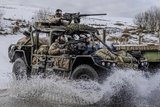
The Light Mobility Vehicle segment of the UK’s Land Mobility Programme for the British Army may actually be about to make progress, or at least likely bidders seem to think so. Shephard spoke with several contenders who revealed their views on how the army should replace the ageing fleet.
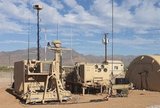
Northrop Grumman’s Integrated Battle Command System is in service with Polish forces and is being introduced to US forces, with further development underway on the original platform as well as a smaller, more mobile system.
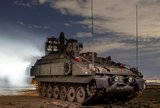
The UK’s plan to introduce a new air defence capability into the British Army will cover short and medium-range defence as well as counter-uncrewed aerial system systems. Timelines are not yet laid out but industry is making plans.

Connect with us on socials


