LAND 400 Phase 2 testing complete


Blast testing has been completed on the two contenders vying for Australia’s LAND 400 Phase 2 Combat Reconnaissance Vehicle (CRV) programme, the Australian Department of Defence announced on 11 August.
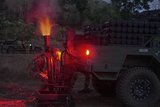
The BAE Systems Australia- Patria AMV-35 and Rheinmetall’s Boxer were exposed to simulated mine blasts to assess their survivability at the Proof and Experimental Establishment at Graytown in Victoria.
The blast tests were conducted under the wheels and under the belly of the vehicles, and mark the final phase of a rigorous programme designed to put the two vehicles through their paces in a range of operating environments.
The test and evaluation programme assessed the vehicles and their support systems across a wide range of criteria, with a particular focus on protection, lethality and mobility; and three phases of user evaluations were conducted at Puckapunyal in Victoria and the Mt Bundey Training Area in the Northern Territory.
The winner of the contract will be announced in the first half of 2018. A total of 225 CRVs will be procured by Australia.
Related Equipment in Defence Insight


More from Land Warfare
-
![Dominating the spectrum: ASELSAN’s EW capabilities take center stage at MSPO 2026]()
Dominating the spectrum: ASELSAN’s EW capabilities take center stage at MSPO 2026
ASELSAN is showcasing its advanced electronic warfare (EW) capabilities at MSPO 2026, highlighting technologies designed to detect, analyse, disrupt and deceive threats across increasingly contested electromagnetic environments.
-
![US Army set to receive first ISV-U-mounted Scorpion Light mortar]()
US Army set to receive first ISV-U-mounted Scorpion Light mortar
Global Military Products will begin deliveries next week under a US$12.9 million agreement covering digitally enabled 81mm mortar systems, vehicle integration and army fire-control technology.
-
![US Army reaches out to industry for M109 replacement in a deal worth up to $8 billion]()
US Army reaches out to industry for M109 replacement in a deal worth up to $8 billion
The US has tried several times to replace the M109 Paladin self-propelled howitzer, a requirement which Shephard forecasts could be for as many as 670 platforms and worth as much as US$8 billion.
-
![“Creating a decision advantage”: how C-UAS is evolving to reduce the operator burden]()
“Creating a decision advantage”: how C-UAS is evolving to reduce the operator burden
In Conversation… Speaking to Shephard’s Gerrard Cowan, Dr Brian Shand, Director – Advanced Concepts & Technology at L3Harris, explains how, as operators face growing numbers of low-cost drones, C-UAS providers must focus on reducing operator workload, transforming fragmented sensor data into effective decision-making.