


Europe commits to long-range fires but countries move in different directions
Sweden, Croatia and France are pursuing different rocket artillery solutions as European armies seek greater reach, survivability and industrial resilience.


L3 Technologies has received a contract from an undisclosed customer to provide night vision equipment, the company announced on 20 December.
The $150 million contract covers aiming and illumination devices, image-intensified systems and thermal imaging systems, including binocular night vision goggles, holographic weapon sights, light weapon thermal sights and advanced target pointer illuminator aiming lasers.
The systems will enable dismounted soldiers to locate and target operational threats at night and in adverse weather conditions.
Christopher E Kubasik, president and chief operating officer, L3 Technologies, said: ‘We are focused on building new relationships and these next-generation capabilities ensure that our international allies receive the best technology, equipment and training available.
‘L3 continues to invest in promising new soldier technologies, such as fusion and augmented reality, to meet the needs of our domestic and international customers today and into the future.’


Sweden, Croatia and France are pursuing different rocket artillery solutions as European armies seek greater reach, survivability and industrial resilience.

The bilateral agreement between the UK and Estonia comes as both countries explore how dispersed troops, drones, digital targeting, anti-tank weapons and increasingly long-range fires can complement the combat mass traditionally provided by heavy armour.

The Military 850 Voyageur 155 Crossover has secured orders from the US Army, Air Force and Marine Corps, addressing demand for agile Arctic mobility with passenger, cargo and towing capacity.

The Light Mobility Vehicle segment of the UK’s Land Mobility Programme for the British Army may actually be about to make progress, or at least likely bidders seem to think so. Shephard spoke with several contenders who revealed their views on how the army should replace the ageing fleet.
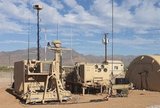
Northrop Grumman’s Integrated Battle Command System is in service with Polish forces and is being introduced to US forces, with further development underway on the original platform as well as a smaller, more mobile system.

The UK’s plan to introduce a new air defence capability into the British Army will cover short and medium-range defence as well as counter-uncrewed aerial system systems. Timelines are not yet laid out but industry is making plans.

Connect with us on socials


