


FNSS advances Indonesian Kaplan APC programme as local production expands
FNSS and PT Pindad are progressing the Indonesian tracked armoured personnel carrier programme as local production gets under way.


British developer of radiation detectors Kromek demonstrated its solutions at the multi-agency Patriot 21 training exercise in the US in June.
Held over three days from 15-17 June at the Volk Field Air National Guard base in Camp Douglas, Wisconsin, Patriot 21 involved CBRN specialists from across the Air National Guard, US Air Force, US Army and FBI.
Kromek deployed D3S ID Radioisotope Identification Device (RIID) devices to support the exercise.
In a statement, Kromek said its D3S ID detector, which is part of the Defense Threat Reduction Agency’s (DTRA) SIGMA system, was put to the test in a variety of scenarios.
‘The exercises demonstrated the importance of RIIDs that operate with speed and sensitivity of detection, provide accurate identification of radioactive material and have autonomous or semi-autonomous reach-back detection and analytical capabilities all to lessen the time operators are directly exposed to radiological hazards,’ the 1 July statement said.
‘Other conclusions from Patriot were that the CBRN specialists need detectors with high levels of endurance in extreme climates, and which are operable, often one-handed, by a user in full PPE.’
John Filby, from Kromek’s Pennsylvania office, who attended Patriot 21, said that at the exercise debrief participants provided positive feedback about Kromek’s D3S RIID’s ‘speed, accuracy, connectivity and endurance’.
‘In one instance, a D3S ID which was idling in snooze mode in an operator’s pocket correctly identified a radiological source before the RIID and survey meter that was actually being tested,’ Filby said.

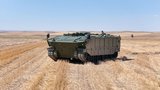
FNSS and PT Pindad are progressing the Indonesian tracked armoured personnel carrier programme as local production gets under way.
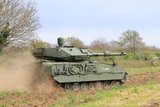
Firing trials of the Tulpar and Leonardo Hitfact Mk II combination follow an integration programme covering mechanical, electrical, electronic and software interfaces.
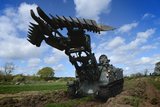
The news from Ukraine has again shown that antitank minefields and other obstacles on the battlefield, such as deep trenches, can play a key role in both offensive and defensive operations. Given this, there will always be a need to clear them, both during and after a conflict.
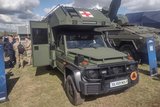
The UK Ministry of Defence has avoided being prescriptive in its search to replace the British Army’s Land Rover, meaning vehicle types being offered range from Land Rover Defender Wolf II and Humvee to the hybrid series Fering Pioneer. What does this mean for the procurement process?

The introduction of Ajax vehicles into British Army service was stopped after operator health issues were reported during an exercise, but manufacturer General Dynamics Land Systems UK believes work over the past 10 months has dealt with the problems.

Sweden, Croatia and France are pursuing different rocket artillery solutions as European armies seek greater reach, survivability and industrial resilience.

Connect with us on socials


