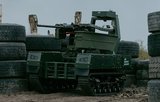
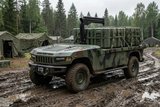
India’s FRCV looks far into the future
India is looking to replace its current T-72 tank fleet with the nascent FRCV. (Gordon Arthur)
The Indian Army relaunches the tortuous pursuit of replacement of its existing fleet of T-72 tanks.


In a move to replace the Indian Army’s existing tank fleet, the MoD has released a 13-page RfI to foreign OEMs for 1,770 new-generation main battle tanks – called the Future Ready Combat Vehicle (FRCV) – under the Strategic Partnership model.
The medium-weight FRCV is to replace some 2,000 Russian T-72s in the armoured corps. It is to be a standardised modular armoured vehicle for a family of supporting platforms, and commonality is projected to bring in a significant reduction in training, maintenance and spares.
Given continued tensions with China on the northeast border, the RfI is China-centric, keeping
Our news & analysis is now part of Defence Insight®
A Basic-level or higher Defence Insight subscription is now required to view this content.


More from Land Warfare
-
![Clearer military requirements could unlock UGV market growth]()
Clearer military requirements could unlock UGV market growth
Western armies continue to test uncrewed ground vehicles, but wider procurement will depend on turning ambitions for autonomy into defined operational roles and funded requirements.
-
![Can NATO’s CUAS marketplace turn urgent demand into deliveries?]()
Can NATO’s CUAS marketplace turn urgent demand into deliveries?
Framework contracts and leasing options aim to shorten acquisition timelines, while manufacturing partnerships could help suppliers scale production to meet allied demand.
-
![A medium UGV market emerges as the US weighs up its options]()
A medium UGV market emerges as the US weighs up its options
The US is pursuing multiple UGV programmes, from commercial robotic platforms to new autonomy technologies. The combination of these efforts could prove key to turning ambition into operational capability.
-
![NATO looks for answers to overcome standards hurdles and improve procurement]()
NATO looks for answers to overcome standards hurdles and improve procurement
NATO is looking to artificial intelligence to provide integration between different C2 systems to create a common operational picture, potentially offering a faster route to interoperability than the slow-moving processes of NATO standards committees.
-
![NATO FUSE exercise plays out real-world scenario in the face of eastern border risks]()
NATO FUSE exercise plays out real-world scenario in the face of eastern border risks
The large-scale exercise in Latvia was the culmination of three experimentation initiatives to see how platforms, weapons and systems could fit into the alliance’s Eastern Flank Deterrence Initiative. As well as forces, it brought together companies and equipment.