


New uses for proven weapons: adapting the Chain Gun for CUAS
Northrop Grumman’s M230LF Chain Gun is finding a growing role in countering uncrewed aerial systems, with the 30mm weapon already deployed to Ukraine and adopted by US forces.


Honeywell has announced that it has completed the delivery of advanced ballistic materials that will be used in the development of next-generation combat helmets for the US Army. The company made the announcement 15 May, 2012.
Honeywell said it has delivered 218 helmets containing advanced Spectra Shield and Gold Shield ballistic materials that the army will evaluate to help set new helmet performance requirements. The helmets are designed to be 16 to 24 percent lighter than the helmets US soldiers currently wear, and provide increased ballistic and non-ballistic performance against handgun rounds and fragments from improvised explosive devices.
Spectra Shield is manufactured using Honeywell’s proprietary shield technology, which bonds parallel strands of Spectra fibre with an advanced resin system. Spectra fibre is made from ultra-high-molecular-weight polyethylene using a patented gel-spinning process. The fibre exhibits ‘high resistance to chemicals, water and ultraviolet light, and has excellent vibration damping, flex fatigue and internal fibre-friction characteristics’, and has ‘as much as 60 percent greater specific strength than aramid fibre.’
The delivery was made as part of a contract signed with the army in April 2011. The equipment will now be evaluated by the US Army’s Programme Executive Office (PEO) Soldier as part of a wider effort to reduce the weight of soldier body armour and increase head protection for greater soldier comfort, mobility and safety in the field.

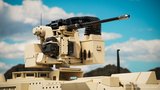
Northrop Grumman’s M230LF Chain Gun is finding a growing role in countering uncrewed aerial systems, with the 30mm weapon already deployed to Ukraine and adopted by US forces.
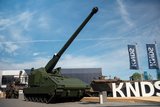
KNDS Deutschland has fitted a tracked RCH 155 with a new KNDS France 155mm/58cal ordnance, opening a potential path towards significantly longer-range artillery and a future beyond the current NATO standard.

It is believed that three companies did not make the downselect but a dark horse in Spain’s Iturri is believed to have got through.
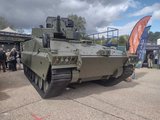
Air defence and counter-drone weapons continue to be developed, tested and demonstrated in anticipation of growing demand, with most solutions designed to be platform-agnostic and readily integrated onto suitable platforms.
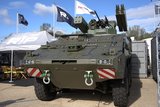
The US Army began its search for a 155mm tracked mobile tactical cannon in an effort that Shephard forecasts could be worth billions of dollars. Meanwhile, the UK DVD exhibition saw companies showcase their offerings for the British Army’s mobility and air defence requirements.
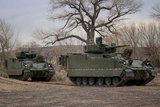
The development demonstrates how the platform could provide additional firepower and growth potential while the US Army progresses its long-term replacement for the Bradley.

Connect with us on socials


