TDW GmbH, a subsidiary of MBDA, has said it will restart its PARM DM22 roadside anti-tank mine production line following a contract agreement with the German government announced on 15 November.
The contract to provide 2,600 systems has been estimated to be worth EUR68 million (US$72.5 million) and features an option for the German government to purchase as many as 10,000 more units.
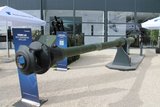
The firing unit and effector is mounted on a tripod and can be activated remotely by a soldier, or with the vehicle passing over a cable or past a sensor.
A company official said: ‘With the procurement, PARM is in the process of returning to serial production [and] marks a first milestone of the ramp up of our production capacities.’
The combat-proven PARM system has been can be carried by a single soldier and has been designed to require little training. Its modular design means it can be adapted with different sensors and a remote control.
The German government said the order was a direct result of Russia’s invasion of Ukraine with the newly ordered units set to replace units sent to Ukraine.
Ukrainian sources on social media reported that Germany had delivered 14,900 DM22 and DM31 anti-tank mines to Ukraine but a breakdown has not been provided of how many of either type.