Germany modifies Puma before NATO task force deployment
Improvements were made to the Puma IFV after an operational test in July 2020 identified ‘significant defects’.


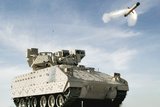
Optical systems, weapon effects and soldier protection features on the Puma tracked IFV have been ‘significantly modified’ so that the German Army can undertake a lead role in the NATO Very High Readiness Joint Task Force (VJTF) deployment in 2023, the German Armed Forces announced on 18 March.
For VJTF, Puma forms part of a broader Panzergrenadier system comprising the IFV and the modular Future Soldier – Expanded System (IdZ-ES) soldier system in an advanced, network-enabled warfare environment.
However, a tactical operational test in July 2020 was unsuccessful as ‘significant defects’ were found ‘and the capabilities of the system were significantly limited’, the German Armed Forces noted.
As a result, the German defence procurement agency BAAINBw, the German Army and an industry team led by Rheinmetall spent six months modifying the Puma.
A second operational test in February 2021 (including a comprehensive logistics and supply assessment) proved the tactical combat capability of the vehicle as ‘an essential prerequisite’ for deploying Puma in VJTF 2023, according to the German Armed Forces.
Training and certification will be carried out by Panzergrenadierbataillon 112 before VJTF 2023 deploys.
As part of our promise to deliver comprehensive coverage to our Defence Insight and Premium News subscribers, our curated defence news content provides the latest industry updates, contract awards and programme milestones.
Related Programmes in Defence Insight
Related Equipment in Defence Insight



More from Land Warfare
-
![AUSA 2026: companies adapt munitions and missiles for greater effect at lower costs]()
AUSA 2026: companies adapt munitions and missiles for greater effect at lower costs
Rather than developing entirely new weapons, defence companies are looking to build on existing weapons and systems to deliver greater capability, control costs and accelerate fielding.
-
![With changing patterns in Middle Eastern procurement, is Europe missing out?]()
With changing patterns in Middle Eastern procurement, is Europe missing out?
Traditional suppliers are struggling to meet the Middle East’s armoured vehicle modernisation needs, creating opportunities for South Korean manufacturers and regional defence industries.
-
![AUSA 2026: CUAS market expands as suppliers target new threats and operational requirements]()
AUSA 2026: CUAS market expands as suppliers target new threats and operational requirements
New developments from MARSS, MyDefence, Mountain Horse Solutions and Rafael suggest that future counter-drone protection will increasingly depend on combining advanced detection, rapid interception and integrated defensive networks.