


Why bridging the gap between military and COTS systems is key to seamless defence comms (Studio)
Technology that enables armed forces to leverage existing network infrastructure can be a game-changer in many combat scenarios.


General Dynamics Land Systems-Canada has been awarded a $35.5 million contract to produce 24 Light Armored Vehicles (LAV-A2) in various configurations for the United States Marine Corps. General Dynamics Land Systems, the Canadian company's parent corporation, is a business unit of General Dynamics.
The LAV-A2 is a mobile, agile and survivable system for conducting offensive and defensive operations in support of the Marine Air-Ground Task Force. The eight-wheeled amphibious vehicle is equipped with enhanced armor protection and an automatic fire-suppression system for crew protection, as well as a robust suspension for mobility.
Vehicle production will be performed at the General Dynamics Land Systems-Canada operations in London, Ontario, and will be completed by April 2012. In total, 207 LAV-A2 vehicles have been ordered by the Marine Corps since 2007. Nearly 800 units of an earlier version of the Light Armored Vehicle entered service with the Marine Corps in the 1980s and continue operational employment today.
The contract was signed through the Canadian Commercial Corporation, a Crown Agency of the Canadian Government.
Source: General Dynamics


Technology that enables armed forces to leverage existing network infrastructure can be a game-changer in many combat scenarios.
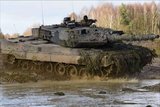
An effort to develop a new European main battle tank has passed several milestones on the road to a Preliminary Design Review which is expected within two years.
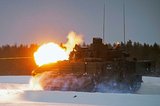
The British Army’s Ajax armoured personnel carrier has a chequered history but hopes were high when Initial Operating Capability was declared last year. More problems saw operations suspended but the MoD reports it has identified the problems and short- and medium-term solutions.
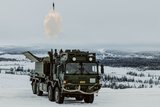
The Ragnarok Mortar Mission Module has demonstrated its ability to quickly switch platforms, presenting scope for it to be employed for multiple requirements.

The British Army’s plans to replace thousands of vehicles have been troubled with resets, delays and change. It is possible, however, that genuine progress is being achieved on two of the three segments in the programme.

The US Army’s organic industrial base still uses World War II production methods and technologies, leading to delays and cost overruns and limiting its ability to produce critical ammunition and maintain its ground fleet in operation.

Connect with us on socials


