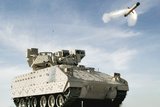
General Dynamics awarded $95m by US Army for Bradley Fighting Vehicle reactive armor
General Dynamics Armament and Technical Products has been awarded a $94.6 million contract by the US Army to produce reactive armor tiles for 440 Bradley Fighting Vehicles. Deliveries are expected to begin in early 2011 and be completed by summer 2012. General Dynamics Armament and Technical Products is a business unit of General Dynamics (NYSE: GD).
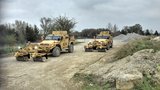
General Dynamics’ reactive armor system is comprised of tiles that fasten to the exterior of the Bradley Fighting Vehicle, allowing it to better withstand direct hits from a variety of anti-armor munitions.
The US Army Contracting Command in Picatinny Arsenal, N.J., awarded the contract in August 2010. Work will be performed at the General Dynamics’ facility in McHenry, Miss., and program management will be performed in Burlington, Vt. As a strategic partner, Rafael Advanced Defense Systems Ltd., Ordnance and Protection Division, will share the production workload in Haifa, Israel. The company has produced reactive armor tiles for the Bradley Fighting Vehicle since 1996.
“Our reactive armor tiles are light-weight and provide an increased level of equipment and troop protection against shaped-charge and improvised threats,” said Russ Klein, vice president and general manager of weapon systems for General Dynamics Armament and Technical Products.
Source: General Dynamics Armament and Technical Products




More from Land Warfare
-
![AUSA 2026: companies adapt munitions and missiles for greater effect at lower costs]()
AUSA 2026: companies adapt munitions and missiles for greater effect at lower costs
Rather than developing entirely new weapons, defence companies are looking to build on existing weapons and systems to deliver greater capability, control costs and accelerate fielding.
-
![With changing patterns in Middle Eastern procurement, is Europe missing out?]()
With changing patterns in Middle Eastern procurement, is Europe missing out?
Traditional suppliers are struggling to meet the Middle East’s armoured vehicle modernisation needs, creating opportunities for South Korean manufacturers and regional defence industries.
-
![AUSA 2026: CUAS market expands as suppliers target new threats and operational requirements]()
AUSA 2026: CUAS market expands as suppliers target new threats and operational requirements
New developments from MARSS, MyDefence, Mountain Horse Solutions and Rafael suggest that future counter-drone protection will increasingly depend on combining advanced detection, rapid interception and integrated defensive networks.