Will we see a rise in MBT alternatives in future armoured warfare?
The Type 100 Light Tank recently unveiled by China. (Photo: Chinese state television)
In recent years, there has been an increase in the number of militaries procuring alternative vehicles to the traditional tank. The spread of these vehicles appears to be driven by the ever-increasing cost of MBTs and the changing nature of the modern battlefield.


Since Russia’s full-scale invasion of Ukraine, there has been significant debate on the role of the main battle tank (MBT) in modern warfare. MBT detractors claim that heavy armour has been rendered obsolete by the proliferation of new threats like first-person view (FPV) uncrewed aerial systems (UAS) and loitering munitions.
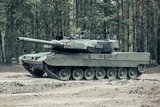
These new threats are exceedingly cheap, while MBTs are increasingly expensive. The Leopard 2A8, recently unveiled by KNDS, costs an estimated US$16 million, while drones like the GA-10FPV-AI, which have been so effective in Ukraine, cost an estimated $850. The MBT’s defenders, meanwhile, maintain that nothing provides the
Our news & analysis is now part of Defence Insight®
A Basic-level or higher Defence Insight subscription is now required to view this content.



More from Land Warfare
-
![Greece opts for PULS long-range artillery as demand for capability surges]()
Greece opts for PULS long-range artillery as demand for capability surges
Greece’s selection of PULS makes it the sixth European country to choose the system and follows Sweden’s plan to buy HIMARS and Norway’s selection of Chunmoo artillery systems. The diverse choices for a similar capability highlight demand and a desire for European industrial capacity.
-
![Predicted air defence spending boom opens doors to Indian industry]()
Predicted air defence spending boom opens doors to Indian industry
Recent conflicts have created a surge in interceptor demand worldwide while exposing potential supply chain challenges, positioning India as a cost-effective partner and scalable supplier.
-
![March land forces roundup: A new war confronts the old drone problem]()
March land forces roundup: A new war confronts the old drone problem
The attack by the US and Israel on Iran which began at the end of February presented a Ukraine-like scenario of drone-led warfare – in fact the same drone type in the Shahed – and the problem of how to counter them.
-
![New US$1.4 billion package to boost Canada’s defence capabilities]()
New US$1.4 billion package to boost Canada’s defence capabilities
The Canadian defence department has outlined major investments in ISR solutions, small arms and ammunition production capabilities as the country pushes for greater self-reliance to bolster its forces and its supply chain.