


Canada accelerates uncrewed aerial system procurement for NATO and Arctic forces
Canada plans to acquire at least 120 uncrewed aerial systems through two competitions with combined funding ceilings of C$32 million.


The French Army has taken delivery of 150 JIM LR 2 multifunction long-range infrared binoculars from Sagem as part of a contract issued by the DGA in December 2010. The contract, part of the JIR TTA NG (1) programme, will see 1,175 multifunction binoculars delivered in total.
The delivery in December followed a series of government qualification tests performed in the DGA’s own test centres from February to June 2012 to verify performance specifications. French armed forces had already carried out field tests.
JIM LR 2 is a portable, compact unit, combining a number of advanced functions: day and night (thermal) vision, rangefinder, laser pointer, compass, GPS and data transmissions. It is fully compatible with Sagem’s own FELIN integrated equipment system for dismounted soldiers.
The system offers several major improvements in relation to the initial JIM LR version, including enhanced detection performance; longer-range pointer for fire support; 30% longer run time; and the ability to record images and videos integrated in the product. Coupled to a new remote control terminal, JIM LR 2 also provides a full-fledged optronic system for area surveillance, intelligence and support, whether used by dismounted troops or from a vehicle.
A total of 5,000 JIM LR binoculars are now in service or under order worldwide, including 2,000 in France.


Canada plans to acquire at least 120 uncrewed aerial systems through two competitions with combined funding ceilings of C$32 million.
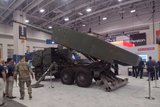
New counter-drone technologies, autonomous launchers and manufacturing modernisation initiatives highlighted emerging opportunities for defence suppliers, while the UK advanced a major military vehicle procurement programme.

Non-US companies are increasingly looking to establish subsidiary and partnerships to access the potential billions of dollars of vehicle and land systems contracts and there has already been some success.

Pearson Engineering has provided equipment and engineering expertise to the Armed Forces of Ukraine since the beginning of the full-scale Russian invasion in 2022. The British company is now working to deepen engagement with the Ukrainian defence industry, expanding its support for the country’s population and laying the foundations for future technological innovation.
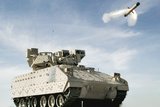
Rather than developing entirely new weapons, defence companies are looking to build on existing weapons and systems to deliver greater capability, control costs and accelerate fielding.

With a production rate of more than 10 million vehicles annually, the US commercial car and vehicle manufacturing base is second only to China. Defence companies are looking at how the vehicles, technology and manufacturing capability can support programmes.

Connect with us on socials


