Force Protection Australasia submits REDFIN bid
Force Protection Australasia Pty Ltd (FPA), a FORCE PROTECTION, INC. group company today announced it has submitted a bid to the Australian Defence Materiel Organisation for the manufacture of Special Operations Vehicles - Commando for the Australian Defence Force.
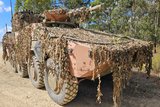
The tender for Project JP 2097 Phase 1B (also known as Project REDFIN) is based on a variant of the company’s Ocelot vehicle, which is already being evaluated as part of the Australian Government’s Land 121 Phase 4 Protected Mobility Vehicle - Light (PMV-L) program.
Force Protection Australasia Managing Director, Dave Miller, says the Commando variant continues the Ocelot’s core design concept whereby the crew and passengers sit inside a protective pod made of advanced composite materials while beneath them critical components such as the engine, fuel tank and transmission are contained in a V-shaped armoured spine that deflects a blast away from the vehicle.
“We’re very confident our team has produced the most highly protected and agile vehicle of its size and weight available on today’s market. One of the most attractive aspects of the vehicle, on top of its survivability levels which protect the crew and mission systems, is its unique modular construction which means that pods can easily be changed in theatre to suit the requirements of each mission,” Mr. Miller said.
The vehicle has already proven its worth when Force Protection was recently contracted by the UK’s Ministry of Defence (MoD) to supply its Ocelot for the MoD’s urgent operational requirement for the Light Protected Patrol Vehicle program (LPPV).
The first of these vehicles, known as the Foxhound in the UK, is now in production and will be in service by mid-2012. Force Protection vehicles already represent some 46 per cent of the UK Army’s Protected Patrol Vehicle fleet.
Force Protection Australasia is one of three companies selected for consideration to undertake the next phase of the Land 121 Phase 4 Manufactured and Supported in Australia (MSA) program, with the contract for the future production of up to 1300 vehicles valued at more than $A1 billion by the Australian Government.
The survivability and reliability of Force Protection’s range of vehicles globally is demonstrated by the fact they have survived in excess of 4,000 IED and land blasts, and that the majority of its vehicles in service since 2004 remain operational.
Source: Force Protection




More from Land Warfare
-
![Demining companies step up in Ukraine as the size of the challenge becomes clear]()
Demining companies step up in Ukraine as the size of the challenge becomes clear
Since Russia’s full-scale invasion of Ukraine in 2022, Ukraine has cleared hundreds of thousands of hectares of mines and unexploded ordnance along with nearly half a million explosive items. Clearance systems are being introduced but the size of the challenge is only going to increase.
-
![Iranian threat puts Bahrain’s air defence capabilities under scrutiny]()
Iranian threat puts Bahrain’s air defence capabilities under scrutiny
With significant foreign military facilities to protect, Bahrain could face pressure to strengthen its short-range air defences.
-
![Armed UGVs become a mature reality as battlefield roles expand]()
Armed UGVs become a mature reality as battlefield roles expand
Uncrewed ground vehicles have been put on show featuring weapons ranging from machine guns to rockets since the turn of century, but the Russo-Ukrainian War has seen them take to the battlefield. At the same time, the US Marine Corps coastal defence system is heading for full rate production.
-
![Transform military training data into actionable insights with Saab's A3R (video)]()
Transform military training data into actionable insights with Saab's A3R (video)
Saab's Automated After-Action Review turns complex training data into actionable insights, accelerating learning and building readiness.
-
![Billion-dollar Belgium deal for NASAMS creates multinational air defence system]()
Billion-dollar Belgium deal for NASAMS creates multinational air defence system
The National Advanced Surface-to-Air Missile System (NASAMS) is in service on five continents with more than 120 platforms delivered. The system will now form part of Belgium’s Blue Dome air defence system alongside new orders for Skyranger air defence and Thales radar systems.