Estonian UGV trial demonstrates work done and work to be done
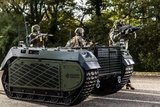
Milrem THeMIS UGV during trials in late June. (Photo: Milrem)
Eleven companies and 20 countries took part in a major two-day trial of large UGVs at the Estonian Military Academy in late June to evaluate the technology capabilities and produce a report on the event’s findings.


The Unmanned Ground Systems Autonomy Trials, held in Estonia this June, were designed to test medium-to-large UGVs in a forest environment and, according to organisers, the results increased understanding of where systems are at and where progress will still be required.
The effort was partially funded by the European Defence Industrial Development Programme integrated Modular Unmanned Ground System (IMUGS) project and organised by the Estonian Defence Forces and Estonian Military Academy.
While the report on the trials has yet to be made public, an event official told Shephard that it had demonstrated a high level of autonomy and capability on
Our news & analysis is now part of Defence Insight®
A Basic-level or higher Defence Insight subscription is now required to view this content.


More from Land Warfare
-
![Boxer lands another order as contracts and opportunities build momentum]()
Boxer lands another order as contracts and opportunities build momentum
As Germany prepares its €25 billion order under the Arminius framework – the biggest Boxer procurement to date – the platform could become an increasingly powerful contender in European competitions.
-
![British Army Land Rover replacement plan inches forward]()
British Army Land Rover replacement plan inches forward
The UK Ministry of Defence has proposed a selection date of May 2027 for the Land Rover replacement requirement, with deliveries expected through to 2036. Next month’s DVD exhibition will be a key shop window for bidders.
-
![Snow patrol and access all areas: the Arctic all-terrain vehicles market grows]()
Snow patrol and access all areas: the Arctic all-terrain vehicles market grows
The procurement and planned procurement of articulated tracked all-terrain vehicles is being driven by a need to replace older platforms and an acknowledgement of a capability gap for Arctic regions.
-
![Push strengthens for a second JLTV supplier]()
Push strengthens for a second JLTV supplier
A move, launched in May, could lead to a second supplier for the US Marines Corps’ Joint Light Tactical Vehicle requirement. Meanwhile, Wisconsin elected representatives have been pushing for necessary funding to be included in the FY27 budget.