The C-UAS challenge: Finding the threat before it finds you
How Teledyne FLIR Defense C-UAS solutions – and sensors optimized for third-party systems integrators – deliver early drone detection and decision advantage for UAS threat response
The USMC will receive 10s of thousands of SBNVG under a new IDIQ contract. (Photo: Elbit Systems)
Elbit Systems of America has received a second indefinite delivery/indefinite quantity (IDIQ) contract for its SBNVGs in a US$500 million deal which will run for the next five years.
The goggles will be provided to the US Marine Corps which started receiving units under a previous contract placed with then-Harris in September 2019 worth US$249 million for 14,000 units. An order was placed at the time and then again in April 2021 and May 2022.
Work will be performed in Roanoke, Virginia, and will be expected to be completed in November 2028.
The FY 2022 procurement funding will be for $944,730 and will expire at the end of the current fiscal year, FY 2023 will be for $46.7 million and FY 2024 will be for $79.3 million.
Under the 2019 contract unit pricing, the latest order would equate to 28,000 units, but the total number will likely to be less than due to rising costs and logistical concerns.
The goggles consist of a high-performance, white phosphor image intensifier binocular, a modular uncooled thermal imaging sensor and a common external power supply.
How Teledyne FLIR Defense C-UAS solutions – and sensors optimized for third-party systems integrators – deliver early drone detection and decision advantage for UAS threat response
In an exclusive interview with Shephard, General Dynamics Land Systems’ director of US strategy and growth disclosed details of the company’s XM30 Wolf design.
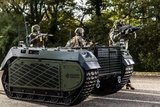
The Crystal Arrow Exercise is being used by NATO as a way to put new equipment such as uncrewed ground and aerial vehicles into the hands of alliance users, particularly Latvian and Baltic forces.
The deal will provide the British Army with five times the number of guns it currently operates as an interim measure, but it still leaves the force with comparatively fewer weapons than partner forces.
Built using proven parts across three countries, the CFL-120 uses a Turkish chassis, an Italian turret and Czech integration to reflect a modular approach to tank design.
At an industry press day this week, Shephard's Christopher Foss looked more closely at Team LionStrike's line-up.