


Companies downselected for British Army vehicle programme
It is believed that three companies did not make the downselect but a dark horse in Spain’s Iturri is believed to have got through.


DRS Technologies has been awarded an indefinite delivery, indefinite quantity (IDIQ) contract for the US Army’s Enhanced Night Vision Goggle III and Family of Weapon Sight (Individual) programme. The contract is worth up to $367 million.
The contract will see DRS provide advanced, fused night vision goggle and integrated thermal weapon sight system, designed to improve lethality, mobility, survivability and situational awareness for dismounted troops in degraded lighting and weather conditions.
The third-generation goggle improves situational awareness and allows soldiers to acquire and engage more rapidly.
Connected through a wireless system, the weapon-mounted thermal sight is designed to transmit imagery to the night vision goggle. This allows troops to stay protected while raising their weapon over an obstacle or around a corner, no longer exposing themselves to enemy fire to aim and fire their weapon.
Shawn Black, vice president and general manager of Infrared Sensors and Systems, DRS Technologies, said: ‘DRS has a long history of providing the US military with leading thermal weapon sight and night vision technology and we look forward to providing this important future capability to ensure our warfighters remain the best equipped in the world.
‘These devices are a result of years of DRS-led innovation and development through US Army and DRS investment. The result is a device that affordably and significantly improves the ability of troops to see and engage targets more rapidly in degraded combat conditions.’


It is believed that three companies did not make the downselect but a dark horse in Spain’s Iturri is believed to have got through.
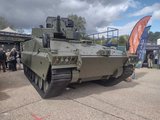
Air defence and counter-drone weapons continue to be developed, tested and demonstrated in anticipation of growing demand, with most solutions designed to be platform-agnostic and readily integrated onto suitable platforms.
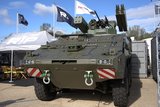
The US Army began its search for a 155mm tracked mobile tactical cannon in an effort that Shephard forecasts could be worth billions of dollars. Meanwhile, the UK DVD exhibition saw companies showcase their offerings for the British Army’s mobility and air defence requirements.

The development demonstrates how the platform could provide additional firepower and growth potential while the US Army progresses its long-term replacement for the Bradley.

FNSS and PT Pindad are progressing the Indonesian tracked armoured personnel carrier programme as local production gets under way.
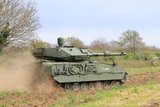
Firing trials of the Tulpar and Leonardo Hitfact Mk II combination follow an integration programme covering mechanical, electrical, electronic and software interfaces.

Connect with us on socials


