


Rheinmetall Nordic’s Ragnarok mortar upgrade shows strong integration potential
The Ragnarok Mortar Mission Module has demonstrated its ability to quickly switch platforms, presenting scope for it to be employed for multiple requirements.


DRS Technologies has been awarded an indefinite delivery, indefinite quantity (IDIQ) contract for the US Army’s Enhanced Night Vision Goggle III and Family of Weapon Sight (Individual) programme. The contract is worth up to $367 million.
The contract will see DRS provide advanced, fused night vision goggle and integrated thermal weapon sight system, designed to improve lethality, mobility, survivability and situational awareness for dismounted troops in degraded lighting and weather conditions.
The third-generation goggle improves situational awareness and allows soldiers to acquire and engage more rapidly.
Connected through a wireless system, the weapon-mounted thermal sight is designed to transmit imagery to the night vision goggle. This allows troops to stay protected while raising their weapon over an obstacle or around a corner, no longer exposing themselves to enemy fire to aim and fire their weapon.
Shawn Black, vice president and general manager of Infrared Sensors and Systems, DRS Technologies, said: ‘DRS has a long history of providing the US military with leading thermal weapon sight and night vision technology and we look forward to providing this important future capability to ensure our warfighters remain the best equipped in the world.
‘These devices are a result of years of DRS-led innovation and development through US Army and DRS investment. The result is a device that affordably and significantly improves the ability of troops to see and engage targets more rapidly in degraded combat conditions.’

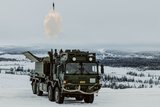
The Ragnarok Mortar Mission Module has demonstrated its ability to quickly switch platforms, presenting scope for it to be employed for multiple requirements.

The British Army’s plans to replace thousands of vehicles have been troubled with resets, delays and change. It is possible, however, that genuine progress is being achieved on two of the three segments in the programme.

The US Army’s organic industrial base still uses World War II production methods and technologies, leading to delays and cost overruns and limiting its ability to produce critical ammunition and maintain its ground fleet in operation.
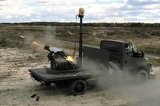
Manufacturers are speeding up their counter-drone development efforts as countries increasingly focus on procurements to provide battlefield and national protection.

Finnish company SCATA will use the Texelis Celeris chassis for a new vehicle similar to the Serval 4x4 which Texelis is building with KNDS France for the French Army.

The proposed $920 million deal would provide Sweden with a step up from its existing tube artillery and align the country with other northern European nations that have selected the HIMARS platform.

Connect with us on socials


